FIP Padel Court Standards and Homologation
When people ask whether a court “meets the standard”, they usually mean one of two things: whether the game can be played properly under the rules, or whether the court can host official competition. For padel court standards, the main reference is the International Padel Federation (FIP), through its rules of play and the annexes covering installations. This article explains the main criteria FIP sets for courts, the standards for glass and mesh, surface and lighting, the difference between tournament and club courts, and how compliance is documented.
To apply this guidance to your own project, see our padel court construction and panoramic padel court pages.
Note: The figures here are general information based on FIP rules. Federation rules and homologation requirements are updated from time to time, so check the current FIP and national federation documents before you finalise a project.
Padel court standards: FIP rules and the homologation annex
FIP is the international governing body of padel and publishes the rules of the game. Part of those rules deals directly with the court: dimensions, walls, doors, net, surface and lighting. There is also a homologation process for assessing courts and court manufacturers used in official competition.
Homologation means the federation confirms that a court, or a court model, meets the defined technical criteria. Not every club court needs it. It matters for venues that want to host official tournaments and for buyers, such as public bodies running a tender, who need to specify a recognised standard.
Who do the rules bind?
A commercial club or a private court can be built and run without FIP approval. Even so, dimensions, heights and wall geometry are expected to follow the rules so that the game plays as it should. A court built to the rules also reduces the risk of costly rebuilding if you decide to host tournaments later.
Public tenders and specifications
Municipalities, universities and other public bodies write technical specifications when buying padel courts. A line that simply says “compliant with FIP rules” leaves room for interpretation. Quotes become far easier to compare when tolerances, glass type and thickness, the glass standard, the steel coating system, turf properties, lighting targets and the documents required at handover are listed as separate items. If homologation is required, state whether it applies to the court model or to the installed court.
Dimensions, walls and doors
FIP rules define the doubles court as 20 metres long and 10 metres wide between the inner faces of the walls, with a small tolerance. The net is 0.88 metres high in the centre and no more than 0.92 metres at the posts. The service lines are 6.95 metres from the net.
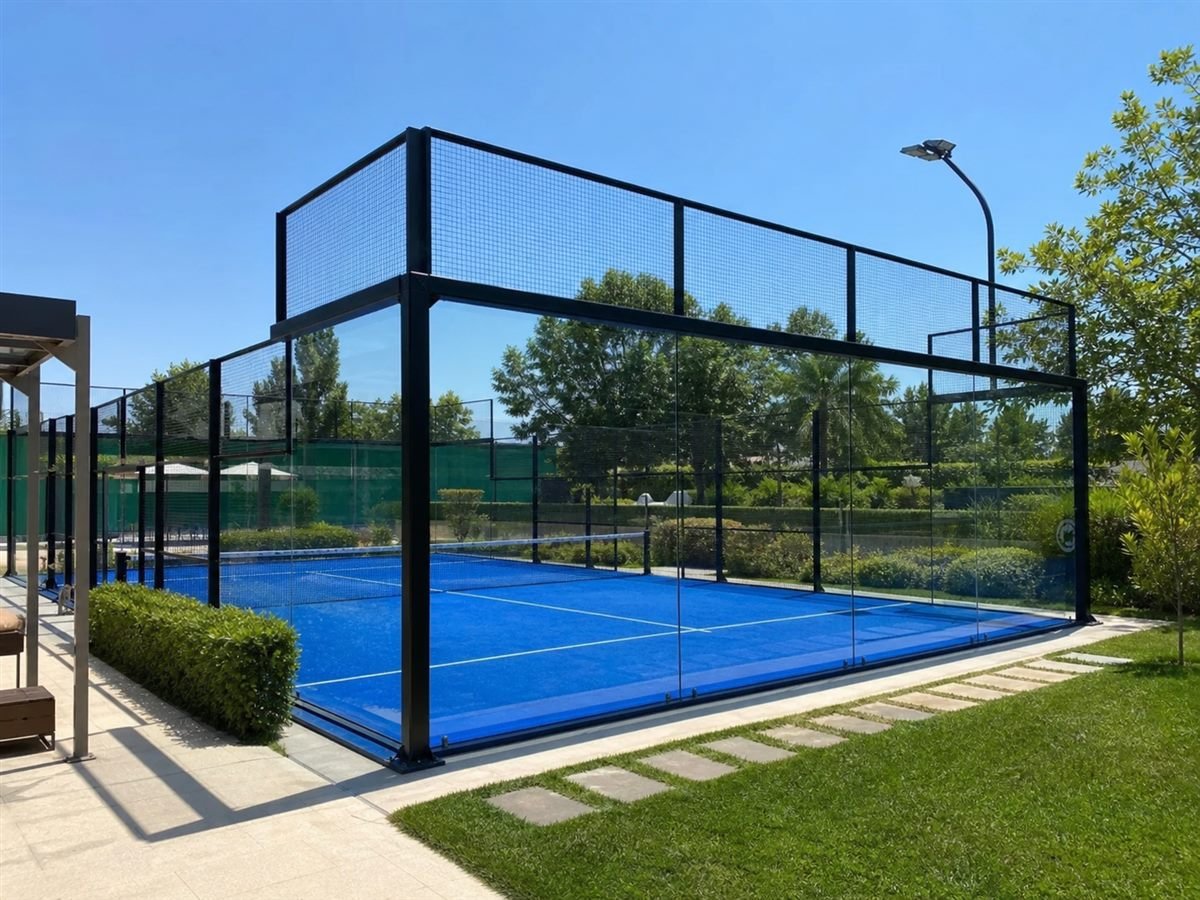
- Back walls: 3 metres of glass with 1 metre of mesh above, 4 metres in total.
- Side walls: stepped glass panels from the back corners, with mesh in the central section.
- Doors: symmetrical openings in the side walls, with dimensions set out in the rules.
- Free height: for indoor courts, unobstructed height over the whole court of at least the FIP minimum of 6 metres; the recommended figure is higher.
Wall surfaces must be flat and solid enough to give a regular bounce, and fixings and sections must not create dangerous projections into the playing area. Our article on padel court dimensions covers sizes and layout in more detail.
Glass and mesh standards
Glass is the most safety-critical part of a padel court. Courts use tempered safety glass, and in Europe the reference standard for it is EN 12150. The standard sets criteria for the heat treatment that toughens the glass and for how it breaks into small, relatively harmless pieces.
What to check on the glass
- Thickness: 10 or 12 mm is common; panoramic models usually use 12 mm.
- Edge finish: edges should be ground and smooth.
- Hole positions: distances from holes to edges are set by the manufacturer and the structural design.
- Marking: a permanent mark and documents showing the glass was produced to the standard.
Mesh panels need openings small enough to stop the ball and a construction that will not trap players’ fingers. The galvanising and coating system on the steel that carries the mesh has a direct effect on the court’s service life. You can review the options on our materials page.
Surface, turf and lighting criteria
FIP rules require a flat playing surface that gives a regular bounce and is safe for players. Most courts today use sand-filled or non-filled artificial turf, and the rules also list permitted surface colours.
What the surface needs
- A similar bounce height at every point of the court
- The right balance of grip and slide for player movement
- Drainage that prevents standing water on outdoor courts
- Lines in a contrasting colour and to the correct dimensions
We look at how turf choice affects play in our article on choosing synthetic turf.
For lighting, FIP asks for even, glare-free illumination across the playing area. Expectations differ clearly between club courts and televised tournament courts. Set target values at the start of the project according to intended use, and confirm them against current federation documents.
Tournament vs club courts
A correctly built club court already has the dimensions and geometry the rules require. Tournament courts add further expectations:
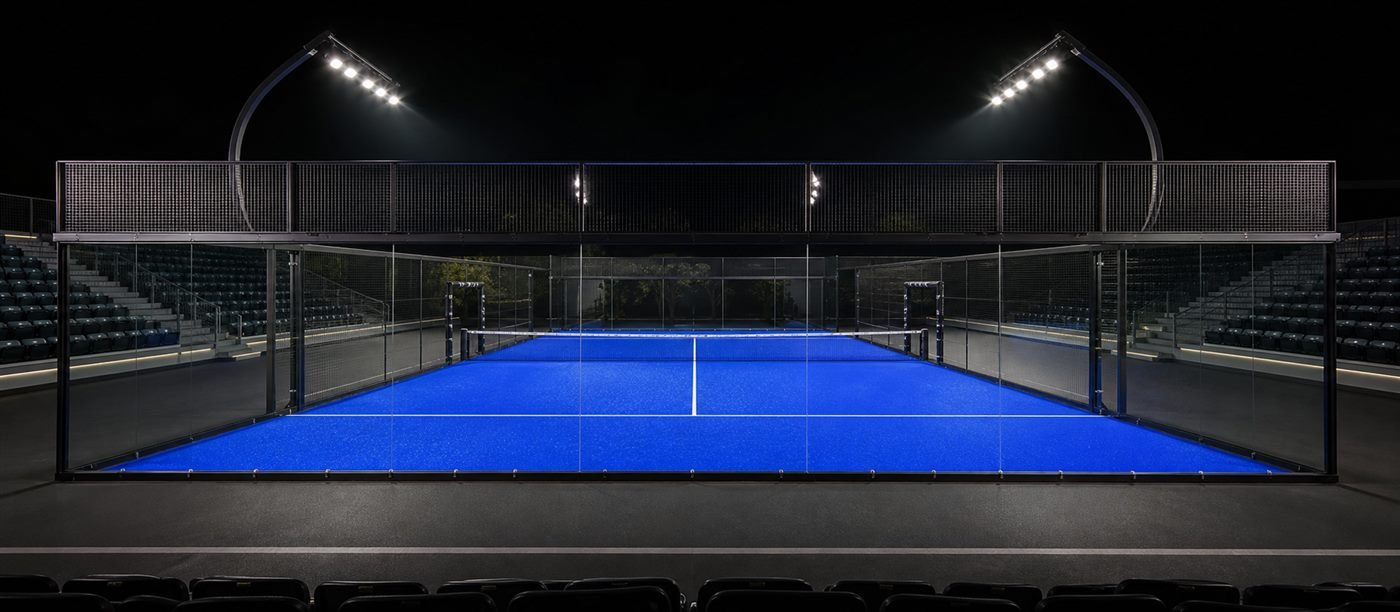
- Higher and more uniform lighting, especially for broadcast
- More free height in indoor venues
- Panoramic glass for spectator sightlines
- Space around the court for spectators, officials and media
- The documents and approvals the organiser or federation asks for
If you plan to host tournaments in the future, say so at the start of the project. If the court model, lighting and building height are not chosen with that goal in mind, adapting them later can be expensive.
Documenting compliance
A court’s compliance is recorded in the documents prepared at handover. A good handover file supports both day-to-day operation and any future homologation application.
What the handover file should contain
- A measurement report: internal dimensions, wall heights, door openings and net height
- Certificates for the glass panels
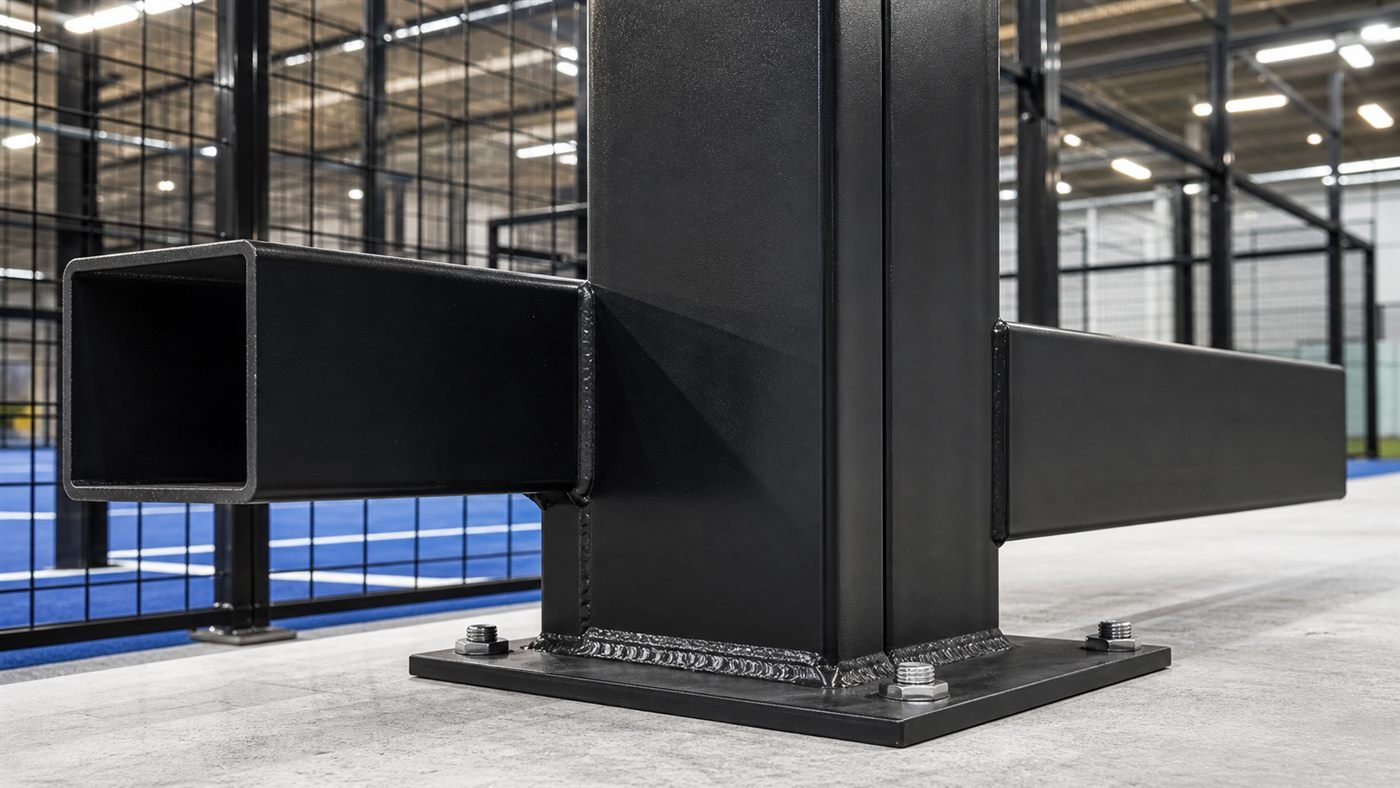
- Material certificates for the steel structure and coating system
- Technical data and test documents for the turf
- Lighting measurement results
- Structural calculations and installation inspection records
If formal homologation is required, get up-to-date information on the application process, criteria and any site inspection directly from FIP or your national federation. Our guide on how to build a padel court walks through every stage of construction.
Plan a court that meets the standard
If you are planning a court for a club, school, municipality or tournament venue, share your goals at the outset. The Padel Court team will review dimensions, glass, surface and lighting against your intended use and prepare the handover documentation to match. Request a technical call through our contact page.
Frequently Asked Questions
Does every padel court need FIP approval?
No. Courts built for clubs, hotels or private use do not need FIP homologation. The dimensions and wall geometry should still follow the rules so the game plays properly. For official tournaments, confirm the requirements with FIP or your national federation.
Which standard should padel court glass meet?
Padel courts use tempered safety glass, and in Europe the reference standard is EN 12150. Thickness is usually 10 or 12 mm. Ask the manufacturer for the marking and certificates that show the glass was produced to the standard.
What is checked for an official tournament court?
Typically the court dimensions, wall and door geometry, net height, glass and mesh, surface, lighting levels and, indoors, the free height. Spectator and broadcast needs may also be assessed. Exact criteria vary by organiser and federation, so check the current documents.