Choosing a Padel Court Manufacturer: 10 Questions
Collect a few quotes for a padel court and you may be surprised by how far apart the prices are. Courts with the same dimensions, similar names and a similar look are offered at very different budgets. Choosing the right padel court manufacturer cannot come down to price alone, because years of safe, trouble-free use depend on materials, engineering and after-sales support. This article sets out ten questions to ask a padel court supplier, how to judge the answers and a checklist for comparing what each quote actually covers.
To apply this guidance to your own project, see our padel court construction and turnkey padel court pages.
Short answer: When comparing quotes, ask about the steel and its corrosion protection, the glass standard and thickness, structural calculations and documentation, reference projects, warranty terms and exactly what the quote includes. Comparing quotes with different scopes on total price alone is misleading.
Why padel court manufacturer quotes differ so much
There are a few main reasons for the spread. The first is materials: steel sections, the galvanising and coating system, glass thickness and turf type all drive cost. The second is scope: one quote may cover only the court, while another includes transport, installation, lighting and groundwork. The third is engineering and documentation: structural calculations, drawings and handover documents are not included to the same degree in every quote.
Before comparing figures, you need to see clearly what each quote includes and what it leaves out. An experienced padel court builder will not mind these questions; a good one will help you clarify the scope.
Material questions
Question 1: Which steel sections and grade are used in the frame?
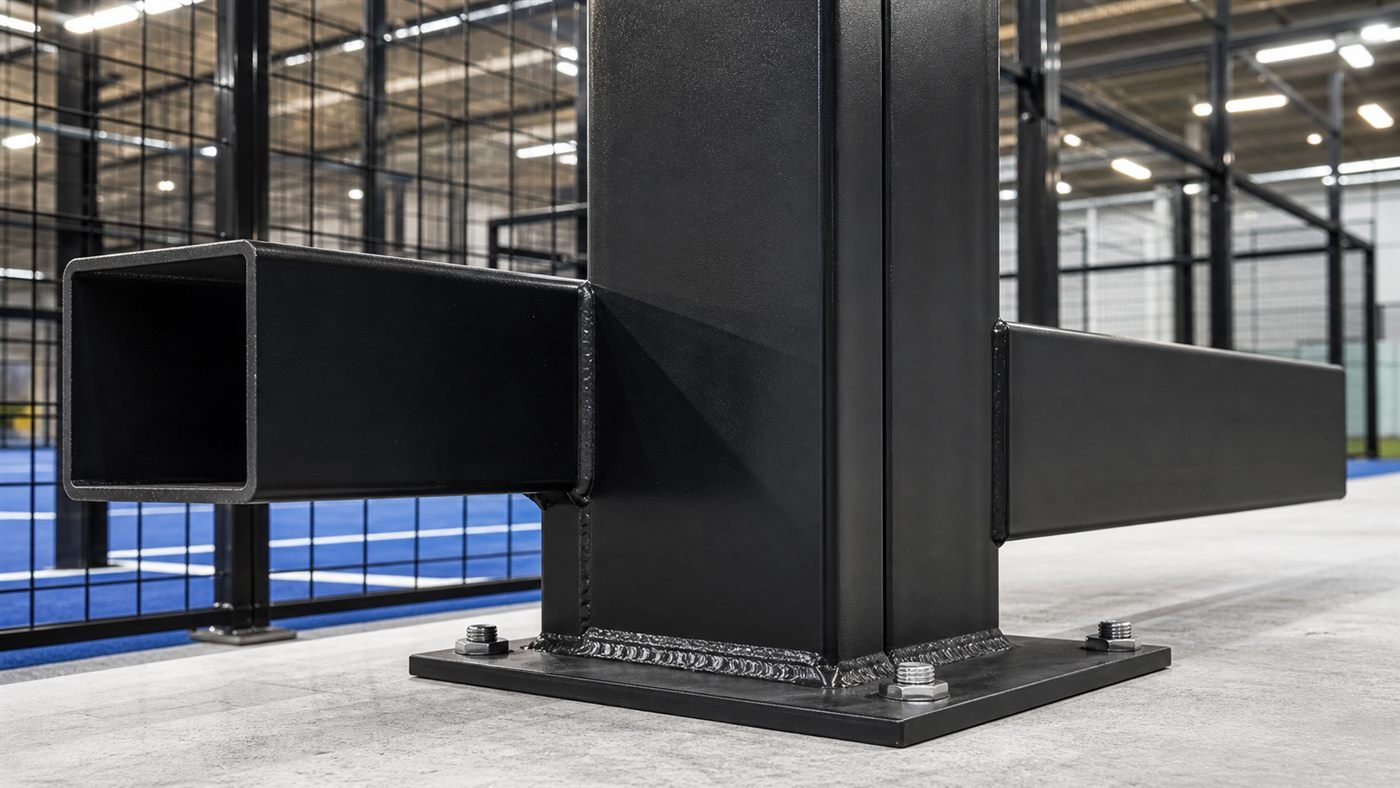
Post and beam sections and their wall thickness decide how stiff the court is and how it behaves in wind. Ask for section sizes and steel grade in writing. Push for measurable information rather than general phrases such as “heavy duty”.
Question 2: How is the steel protected against corrosion?
Hot-dip galvanising, electrostatic powder coating and duplex systems that combine the two offer different levels of protection. On coastal sites and in humid environments, this choice has a direct effect on service life. Ask separately about the material of the fixings (bolts, nuts and washers). We cover the topic in detail in our article on corrosion protection in coastal areas.
Question 3: Which standard is the glass made to, and how thick is it?
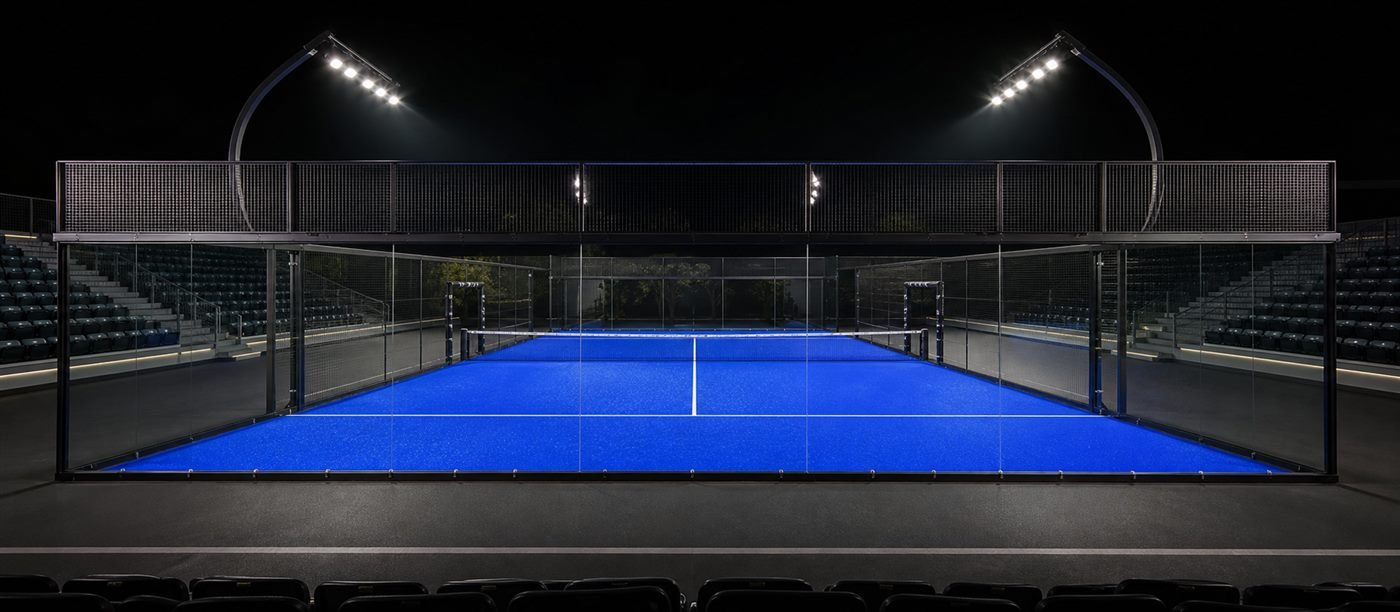
A padel court must use tempered safety glass. Ask for the thickness, the standard it is produced to (in Europe, EN 12150 is the reference) and the documents that prove it. Edge finishing and hole details are also signs of quality.
Question 4: Which turf is supplied, and what are its specifications?
Fibre type, pile height, density and infill requirements shape how the court plays and how much upkeep it needs. The turf manufacturer, product code and data sheet should appear in the quote.
Engineering and documentation
Question 5: Are structural calculations done for our specific site?
The same court faces very different wind loads on an open coastal plot and in a sheltered urban yard. Ask whether the manufacturer calculates for your location and provides anchor and foundation details.
Question 6: Which technical documents are handed over?
Layout and elevation drawings, the anchor plan, structural calculations, material certificates, installation inspection records and maintenance instructions are needed for permits, operation and insurance. Confirm in writing that they are part of the quote.
References and site visits
Question 7: Do you have references from similar projects?
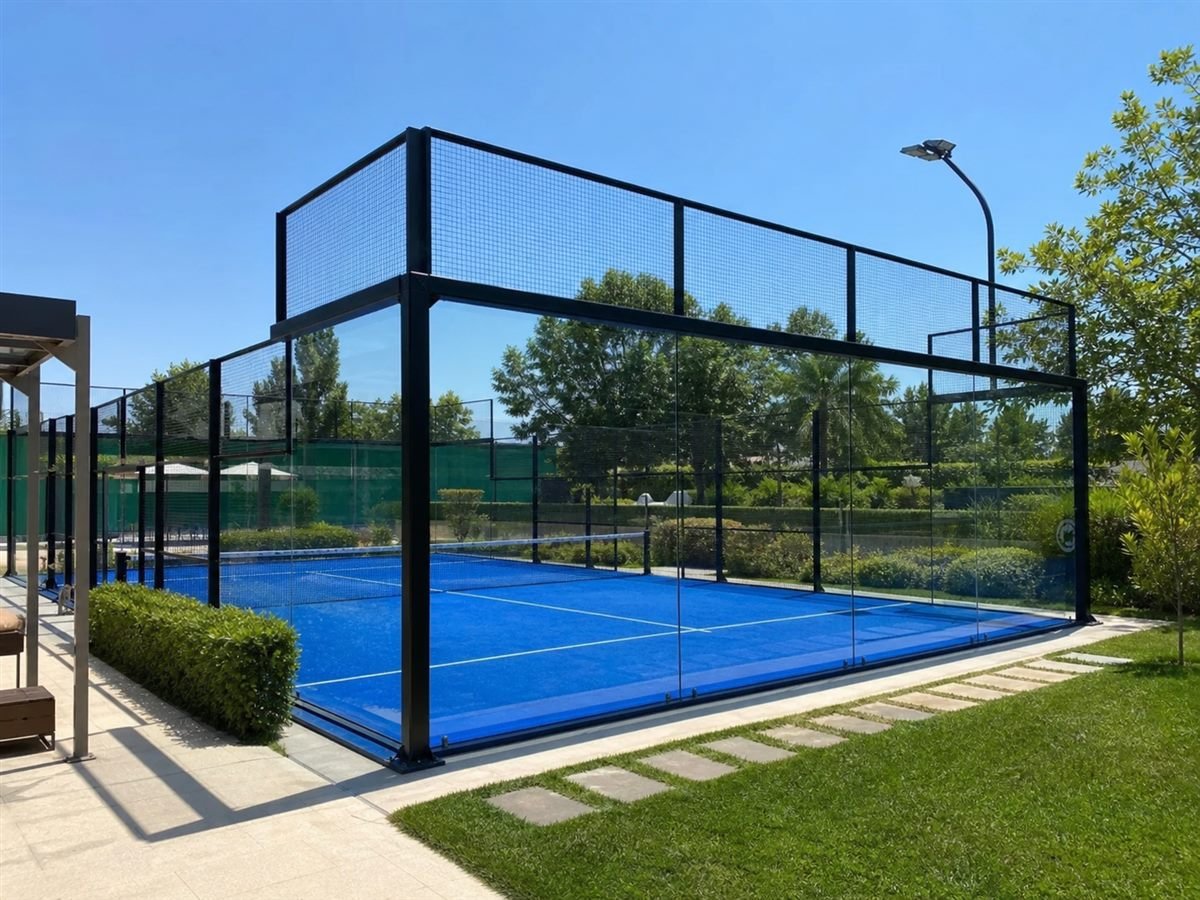
Reference projects show what a company delivers on real sites. Ask for examples with the same court type (panoramic, for instance), a similar climate and a similar scale. If you can, visit a reference venue or speak to its operator. Seeing how a court looks after a few years tells you more than catalogue photos.
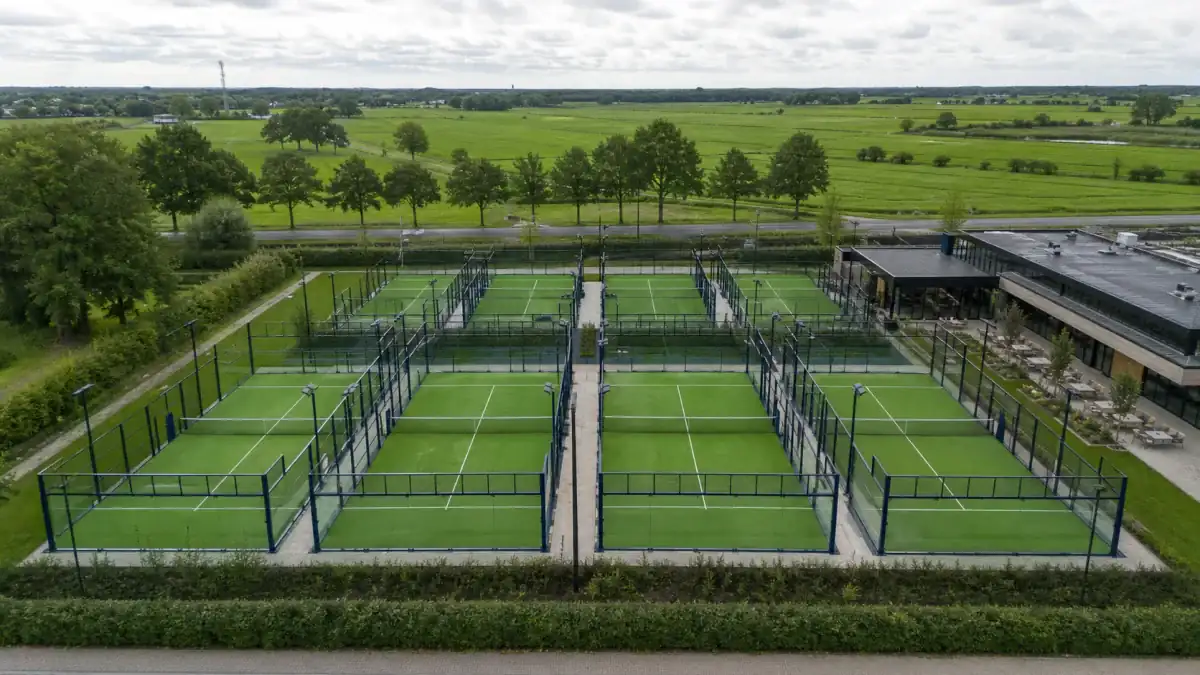
A manufacturer with international references has shown it can work to different climates, standards and quality expectations. Padel Court’s references include ten panoramic courts in the Netherlands, which you can see on our projects page.
Warranty, spares and after-sales
Question 8: What does the warranty cover, for how long and on what terms?
Judge the padel court warranty component by component, not as a single number. Terms usually differ for the steel frame and coating, glass, turf and lighting, and turf and lighting are often covered by their own manufacturers’ warranties. Ask for the exclusions (misuse, missed maintenance, extreme weather and so on) to be written clearly in the warranty document.
Question 9: How are spare parts and service handled?
How quickly a broken glass panel can be replaced is a critical question for any operator. Ask about lead times for spare glass, doors and fixings, and how long a service team takes to reach your site. Some operators keep a small stock of critical parts.
Question 10: Do you offer post-installation checks and maintenance support?
Support in the first months after installation, such as re-checking fixings and helping the turf and sand settle, extends the court’s life. Ask whether the company offers periodic maintenance or training for your staff.
Quote scope comparison checklist
When you line up quotes, mark whether each of the following items is included. Comparing prices before the scopes match gives a misleading picture:
- Court model, dimensions and specifications
- Steel sections, grade and corrosion protection system
- Glass type, thickness, standard and certificates
- Mesh panels, doors and fixings
- Artificial turf, sand infill and lines
- Net, net posts and accessories
- Light fittings, columns and electrical connection
- Structural calculations, drawings and handover documents
- Transport, insurance in transit and unloading on site
- Installation, crew accommodation and equipment such as cranes
- Whether groundwork and drainage are included
- Warranty terms and after-sales services
- Payment schedule and delivery programme
Our padel court cost page explains price ranges and the items that affect them. Reviewing quotes against that list makes scope differences easier to spot.
Before you sign
Once you have chosen a quote, settle a few points in the contract. Linking payments to concrete milestones such as production, shipping and installation gives both sides a balanced arrangement. State the conditions the delivery date depends on: a ready base, permits in place and workable weather. Attach the technical specification and approved drawings to the contract to avoid later arguments about scope. Finally, define acceptance: which measurements and checks have to pass before the court counts as handed over.
Ask us the same questions
Put these ten questions to the Padel Court team as well. Share your location, number of courts and goals, and we will prepare a written quote that answers each point on materials, engineering, documentation and warranty. Request a quote through our contact page.
Frequently Asked Questions
What must a padel court quote include?
The court model and specifications, steel sections and corrosion protection, glass type and standard, turf, net, lighting, structural calculations and documents, transport, installation, warranty terms, payment schedule and delivery programme should all be stated clearly. The quote should also say whether groundwork and drainage are included.
What warranty should a padel court have?
Look at the warranty component by component rather than as a single figure. Terms usually differ for the steel frame, coating, glass, turf and lighting, and turf and lighting are often covered by their own manufacturers. The written exclusions matter as much as the duration, so compare quotes on both.
Why do international references matter?
Projects abroad show a manufacturer can adapt to different climates, standards, logistics and quality expectations. They also say something about its documentation and project management. Even so, the reference should resemble your project in court type and scale.