How Long Does Padel Court Installation Take?
Most clubs and hotels investing in padel start with a target date: the opening of the summer season, a tournament or the start of a new term. So one of the first questions is about padel court installation time. The short answer is that on-site assembly takes a few days, while the whole project, including production, shipping, groundwork and permits, is measured in weeks and months. This article breaks down the phases behind how long it takes to build a padel court, the typical duration of each, what causes delays and how to plan backwards from an opening date.
To apply this guidance to your own project, see our turnkey padel court page.
Short answer: On a base that is ready and has gained its strength, an experienced crew usually assembles a single court in a few working days. Court production, shipping and groundwork are what really set the overall timeline. The exact programme is prepared for each project according to court count, model and site conditions.
The phases behind padel court installation time
A padel court project consists of linked phases. Some can run in parallel; others must wait for the previous one to finish. The general order is:
- Survey and design: site measurements, ground assessment, layout and model selection.
- Permits: local authority approval or building consent where needed.
- Order and production: manufacture or supply of steel, glass, turf, lighting and fixings.
- Groundwork and services: excavation, fill, concrete, drainage and electrical supply.
- Shipping: delivery of materials to site.
- On-site assembly: steel frame, glass, mesh, turf, net and lighting.
- Inspection and handover: measurements, tests and handover documents.
Our article on the 8 steps from survey to handover explains what happens in each phase. Here we focus on time and scheduling.
Work that can run in parallel
The most effective way to shorten the programme is to run independent work at the same time. Courts can be in production at the factory while groundwork goes ahead on site. That means placing the order before the groundwork starts. Ordering only once the base is finished stretches the timeline for no reason.
Production and shipping lead time
The steel structure of a padel court is usually made to order. Cutting, welding, galvanising and coating happen in sequence. Tempered glass panels are cut to size, drilled and heat treated. Turf and light fittings are sourced according to stock.
Padel court lead time depends on the number of courts, the model, colour choices and the manufacturer’s workload, and is generally measured in weeks. Demand peaks in the months before the outdoor season, which can lengthen production queues. Special colours or custom glass can add time.
Shipping and delivery
Shipping time depends on the distance between factory and site and on the mode of transport. Domestic road freight is relatively quick; international shipments add customs clearance and, where relevant, sea freight. Glass panels need dedicated packaging and careful handling, and a crane or forklift must be ready on site for unloading.
Groundwork and base preparation
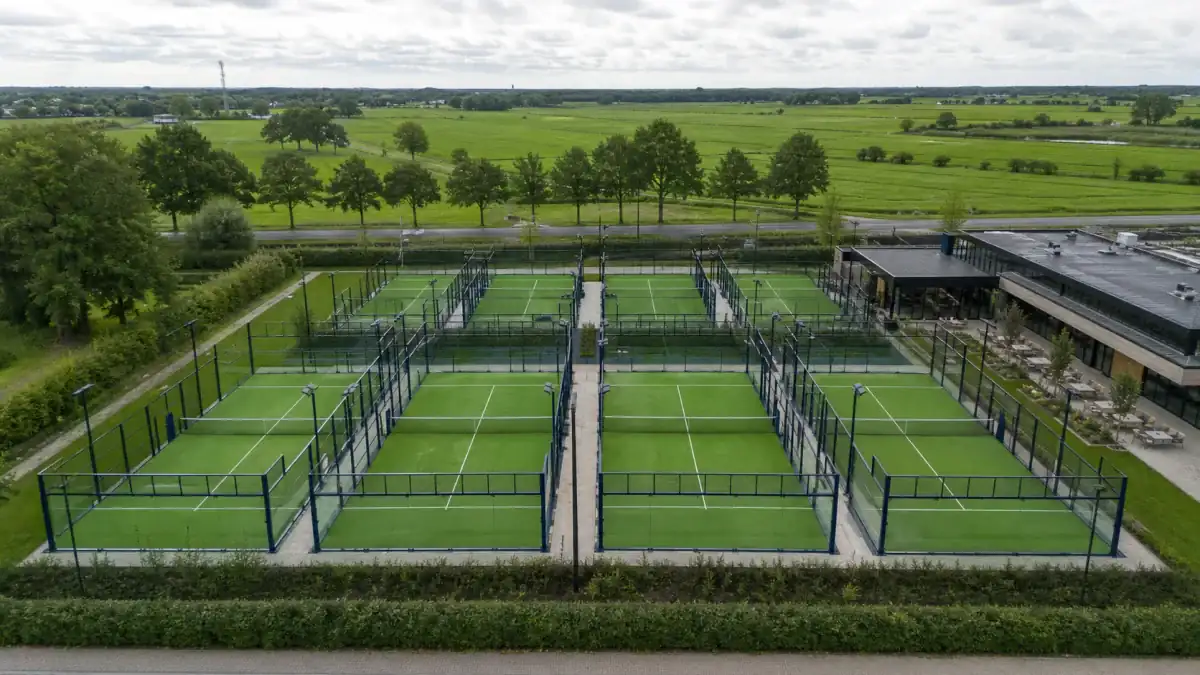
Groundwork is the most variable item in the programme. If a suitable concrete base already exists, this phase is short. A new base involves excavation, fill, compaction, drainage, formwork, reinforcement and pouring, in that order.
After pouring, the concrete must gain enough strength before sensitive superstructure assembly begins. How long that takes depends on the concrete grade, temperature and the engineer’s criteria. The 28-day strength is the usual reference value, and the project engineer decides when assembly can start. If that waiting period overlaps with production, its effect on the overall programme shrinks.
When an existing base is reused
In projects that reuse a base, such as tennis court conversions, groundwork can be shorter. Check flatness, thickness and suitability for anchoring in advance, though. An unexpected problem discovered on site leaves the assembly crew waiting and pushes the programme back.
On-site assembly
Padel court assembly starts once the base is ready and the materials are on site. A typical sequence is:
- Setting out grid lines and anchor points
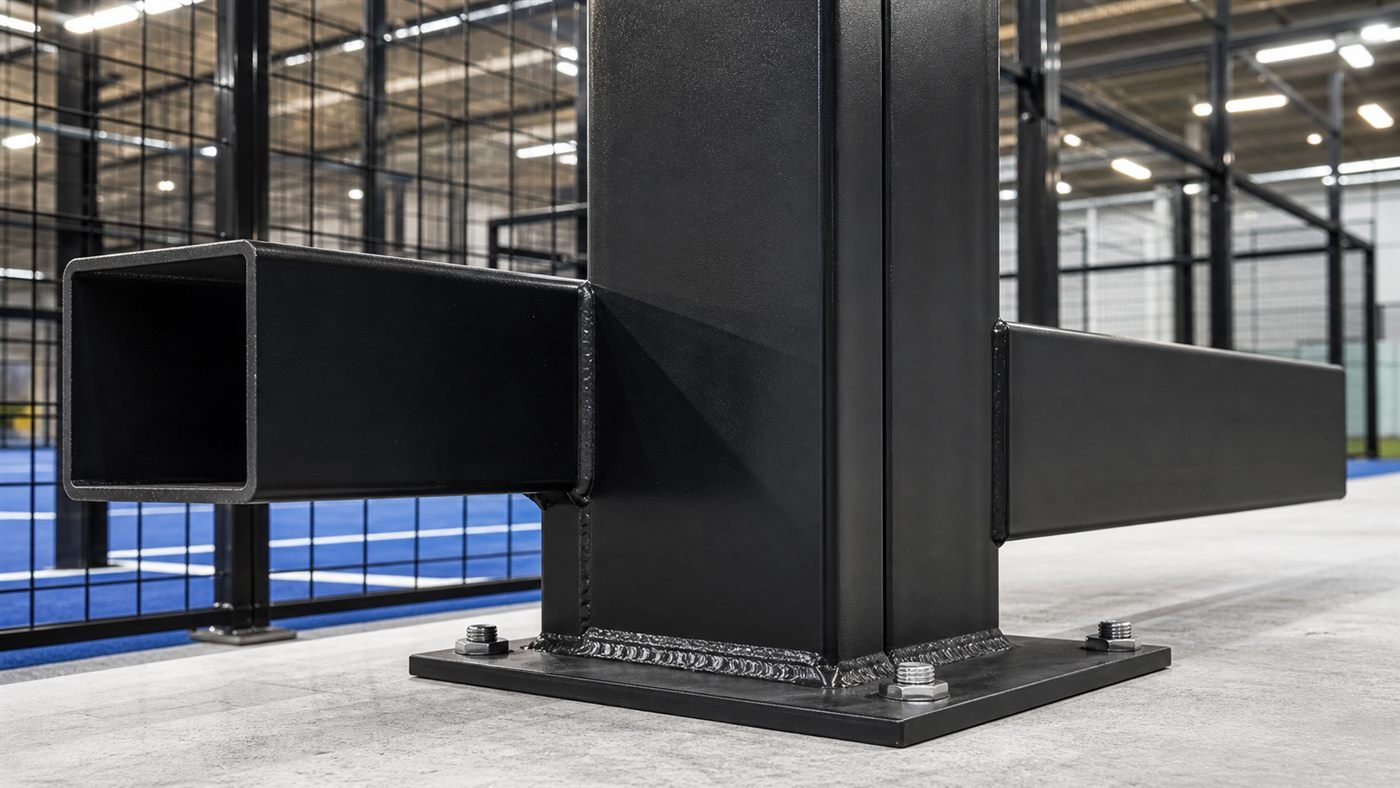
- Erecting the steel posts and frame
- Fitting the mesh panels and doors
- Installing the tempered glass panels and tightening the fixings
- Laying the turf, bonding the seams and setting the lines
- Spreading and brushing in the sand infill
- Installing the net and posts
- Fitting the lights and making the electrical connections
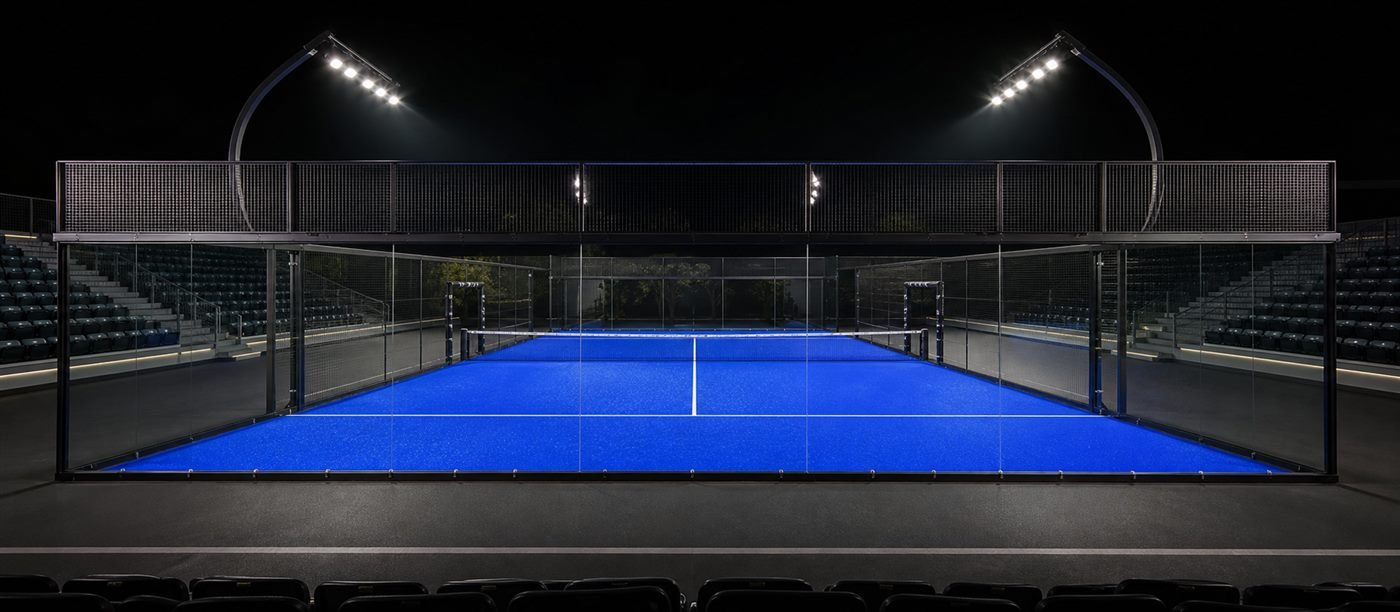
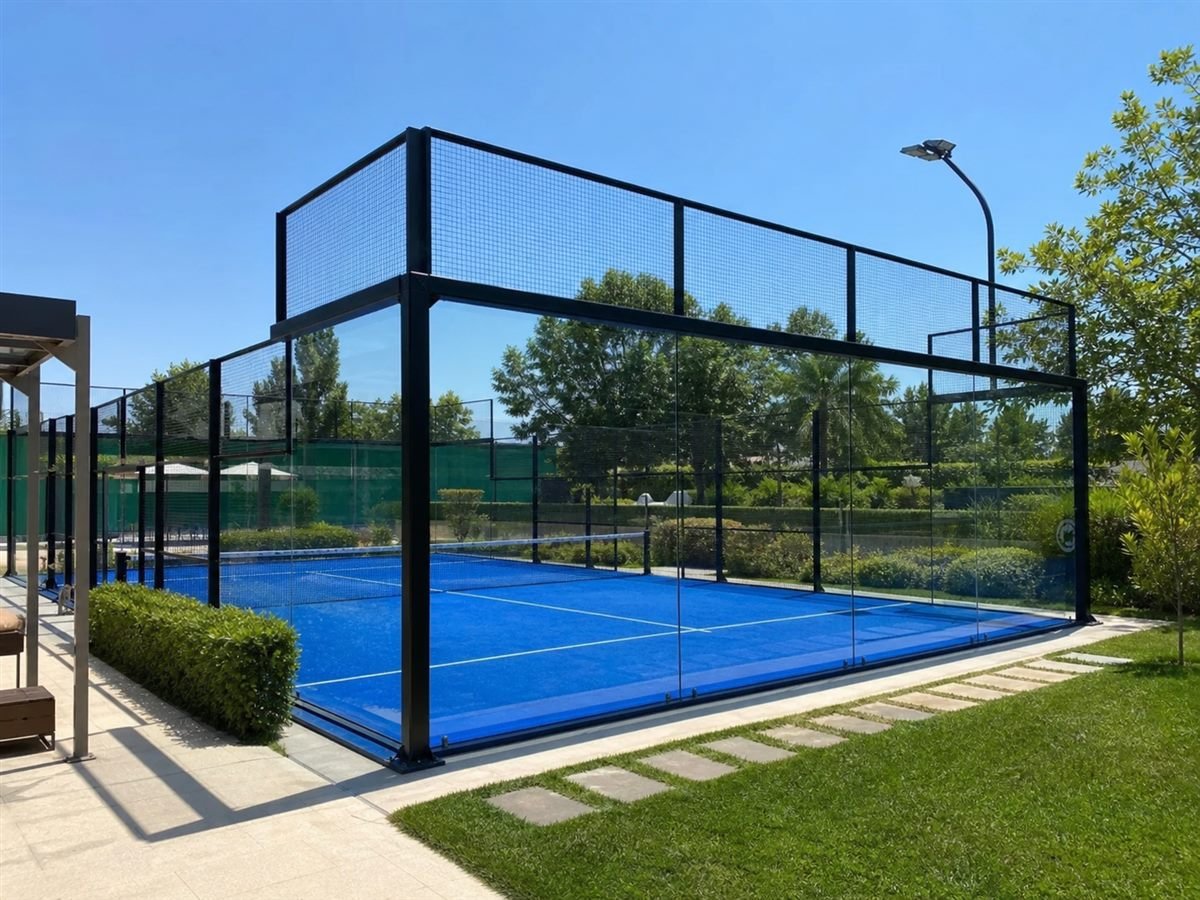
On a ready base, an experienced crew usually assembles one court in a few working days. Panoramic models take a little longer because glass installation is more exacting. Plan the electrical connection and lighting measurements as separate items. Our padel court construction page covers every stage of the installation process.
What delays a project
Unplanned factors can stretch the delivery date. The most common causes of delay are:
- Weather: rain, frost and strong wind can stop concrete pours, turf bonding and glass installation.
- Permits: a slower-than-expected approval shifts the whole programme.
- Ground surprises: weak soil, groundwater or old buried services mean extra work.
- Late ordering: placing the production order after groundwork is done.
- Access: truck and crane access not checked in advance.
- Power supply: the capacity and connection needed for lighting not ready on time.
- Scope changes: changing the model, colour or court count after the order.
A careful assessment during the survey reduces most of these risks. For winter projects, sequence the work around the weather and build in spare days.
Countdown plan for a season opening
If you have an opening date, planning backwards from it is the safest method. A general countdown looks like this:
- Opening day: courts inspected, handed over and open for bookings.
- Before opening: a buffer of a few days for checks, tests and any corrections.
- Assembly window: assembly days for the number of courts, plus weather contingency.
- Base complete: concrete has gained its strength before assembly starts.
- Order date: as far ahead as production and shipping require, in parallel with groundwork.
- Permits and design: at the very start, as early as possible.
Working this way shows clearly when each decision has to be made. For projects that must be ready for summer, placing the order during the winter months usually gives a safer programme.
Build your project timeline with us
Share your target opening date, number of courts and the current state of your site. The Padel Court team will prepare a realistic programme covering production, shipping, groundwork and assembly. Request a quote and a scheduling call through our contact page.
Frequently Asked Questions
How many days does assembly take on a ready base?
On a flat base that has gained its strength, an experienced crew usually assembles a single court in a few working days. Panoramic models, weather and electrical connections can affect that. The exact duration is set in the project programme.
Can a padel court be installed in winter?
Yes, with good planning. Concrete pours and turf bonding are affected by low temperatures, rain and frost. Indoor installations are easier in winter; outdoors, sequence the work around the weather and include spare days. Ordering in winter so production is complete also saves time for a spring installation.
Can several courts be installed at once?
Yes. With the base ready and materials on site, several courts can be installed in parallel or back to back, depending on crew numbers. On multi-court projects, plan the assembly sequence, material storage and crane access in advance.