Private Padel Courts for Villas and Hotels
Padel is no longer played only at clubs. Villa owners, boutique hotels, resorts and residential developments are all looking at courts of their own. A private padel court has different priorities from a commercial club: appearance, neighbours, privacy and low upkeep move to the top of the list. This guide covers the main planning points for a villa, hotel or residential court, from space and orientation to colour choices, noise and lighting, hotel operation and maintenance.
To apply this guidance to your own project, see our padel court construction page.
Short answer: On top of the 20 × 10 m playing area, a private court needs space around it for access and maintenance. Distance to neighbours, orientation, lighting and landscaping matter as much as the area itself. Colour, glass type and turf can be largely tailored to the property.
Who a private padel court suits
Judge a private court by how often it will be used, and by whom. Typical owners include:
- Villa and house owners: for those who play regularly with family and friends, a backyard padel court removes the need to book a club court.
- Boutique hotels and resorts: a court is a distinctive amenity that attracts guests looking for an active stay.
- Residential complexes: a residential padel court adds to the shared facilities and gives residents a common place to meet.
- Corporate campuses and schools: a compact sports facility for staff and student activities.
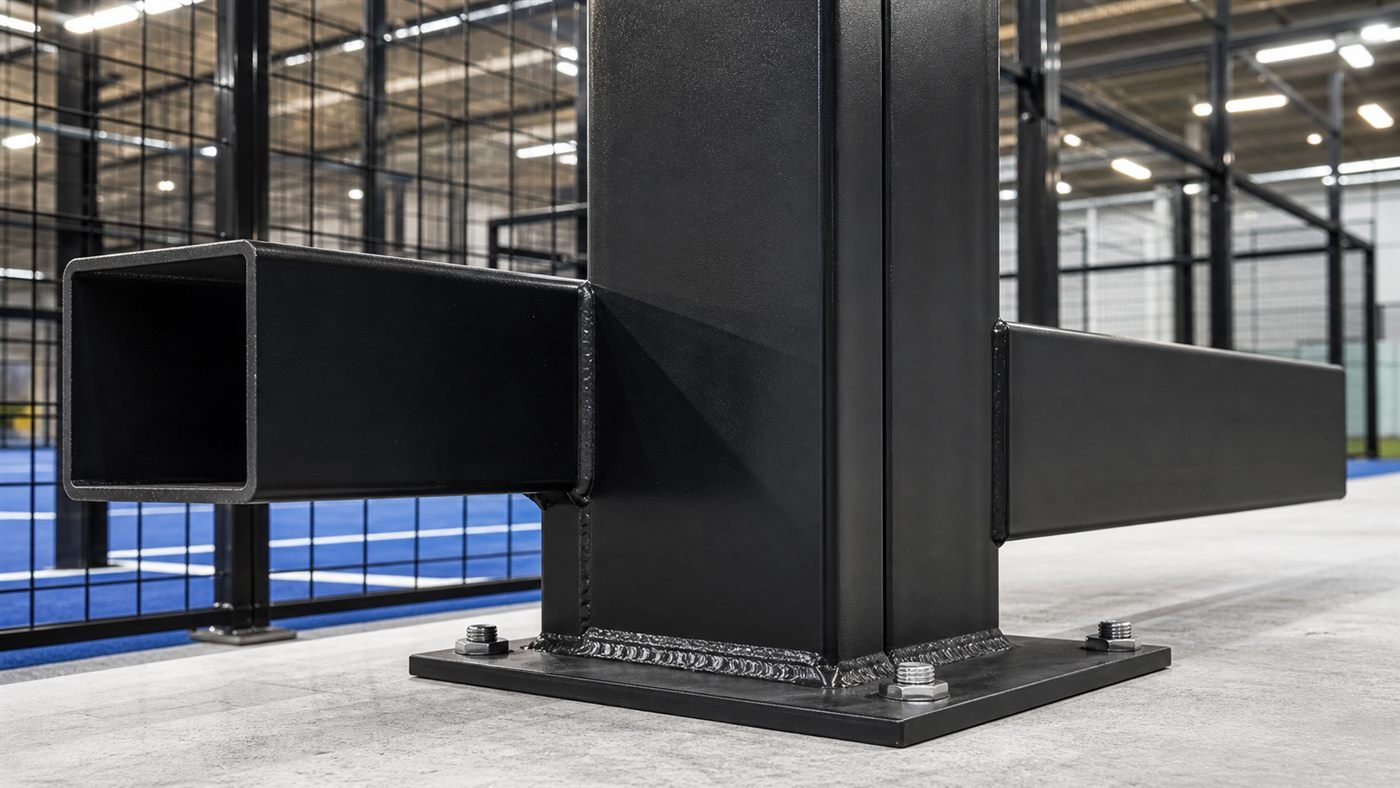
Even where use will be light, do not compromise on quality. Steel, glass and turf decide both the court’s safety and how it looks after several years.
Space, orientation and landscaping
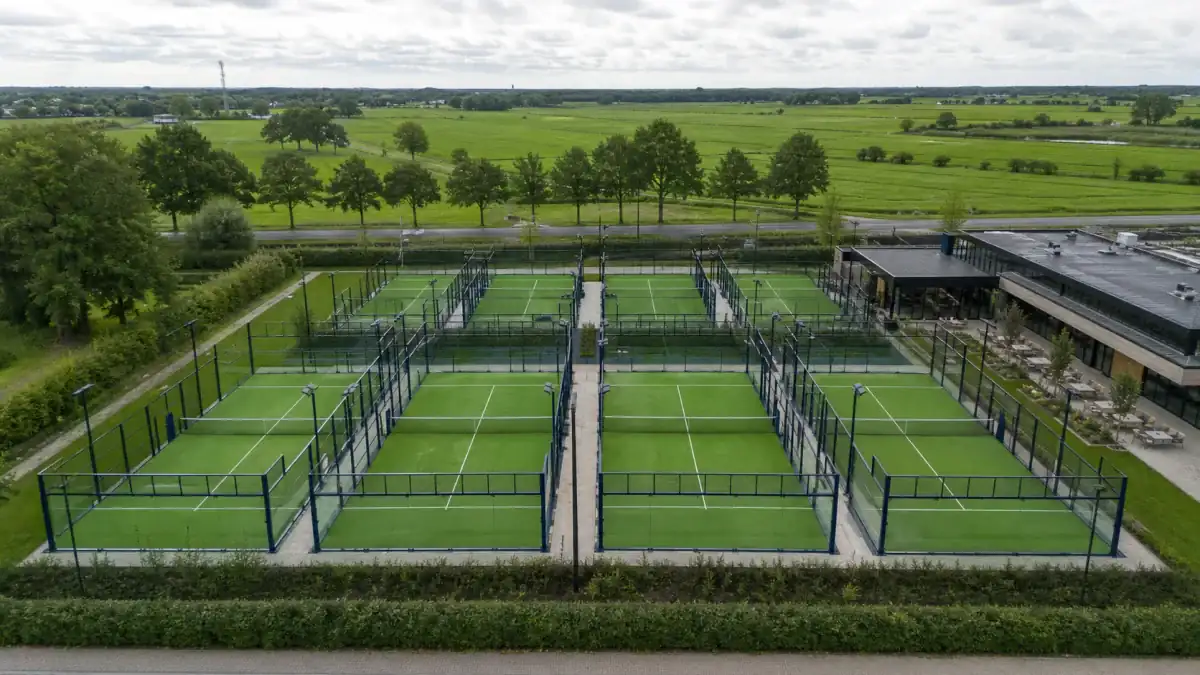
The playing area is 20 × 10 metres, with extra space around the court for door exits, maintenance access and lighting. In a villa garden that space is usually shared with a pool, terraces and lawns, so the court has to be planned with the whole garden layout. Our guide to padel court dimensions covers the measurements in detail.
Orientation
On outdoor courts, the long axis is usually set north–south so that low sun does not shine into players’ eyes. Where the plot shape does not allow this, shading from trees or buildings is weighed together with the hours the court will mostly be used.
Landscaping
Landscaping keeps the court from looking like a foreign object in the garden. Low planting, paths and seating areas help it read as part of the grounds. Deciduous trees close to the court add work, though: leaves collect on the turf and slow drainage, and vigorous roots can damage the foundations. A buffer of a few metres between planting and the court reduces both risks.
Shared courts in residential complexes
In a residential complex, how the court is managed matters as much as how it is built. The management plan should state how bookings work, whether residents can bring guests, when the lights are on and how upkeep costs are shared. A simple online booking calendar prevents most clashes between residents. Planting on the side facing the nearest homes and limited evening hours reduce noise complaints. In a new development, planning the court alongside the landscaping and services makes power, drainage and access far easier than adding it later.
Finishes: colour, glass, turf
Private courts offer more room for personal choices than commercial clubs. The main options are:
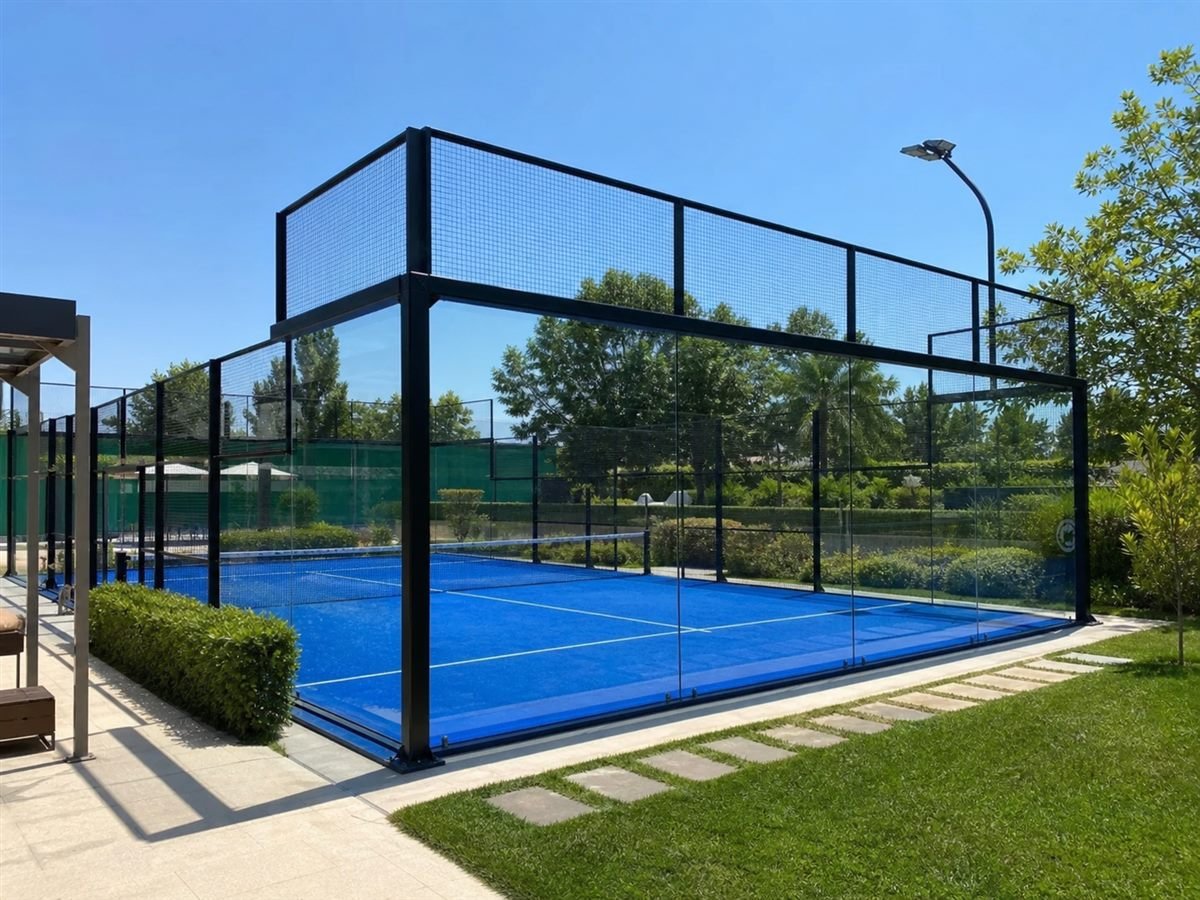
- Steel colour: the frame can be powder coated in different colours. Black and anthracite suit modern architecture; some owners match the colour to the house.
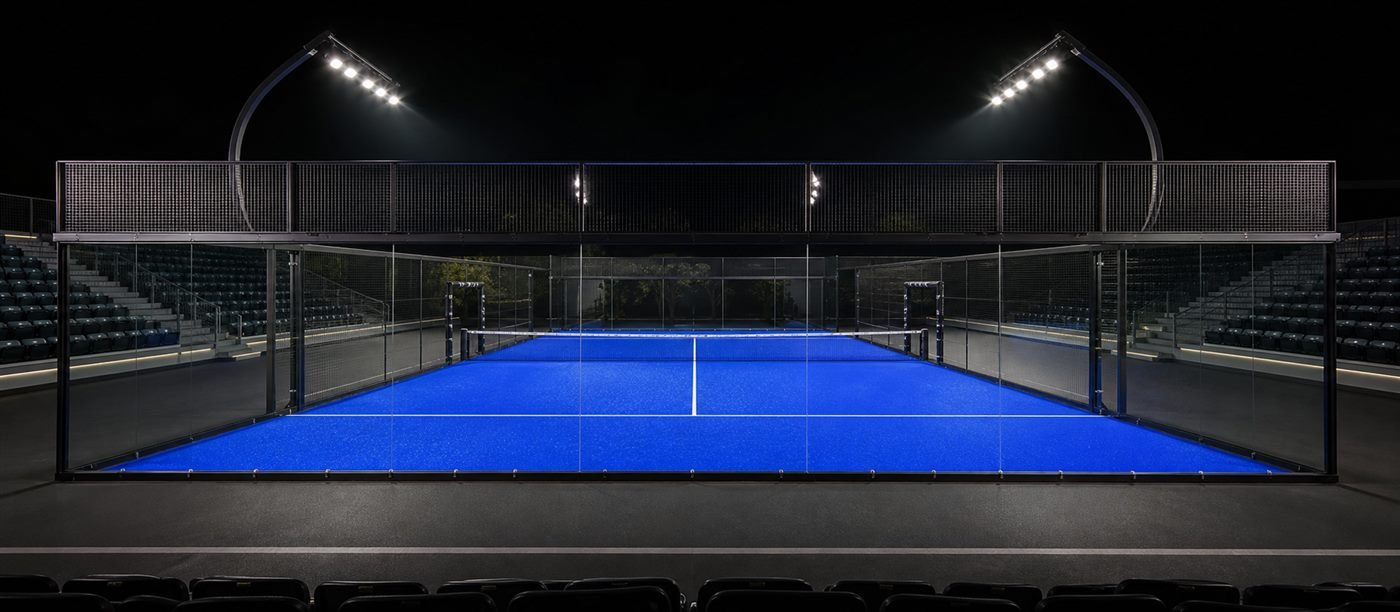
- Glass type: a panoramic model gives an uninterrupted view of the garden and surroundings; a classic model is the more economical alternative.
- Turf colour: blue, green and earth tones are common. Turf colour affects both the look of the court and ball visibility.
- Logos and details: a hotel or development logo can be applied to the glass or surrounding elements.
For villas near the sea, corrosion resistance has to be part of the finish decision. Salt air is a real test of the coating system on the steel.
Neighbours, noise and lighting
The most common problem with private courts is the neighbours. Ball contact with glass and rackets makes a distinct sound, and a court close to the next house can cause friction, especially in the evening.
How to reduce the risk
- Place the court as far from neighbouring buildings as you can.
- Plan planting, a wall or an acoustic barrier between the court and the neighbours.
- Keep evening playing hours reasonable.
- Choose light fittings that direct light onto the court and limit spill.
- Talk to the neighbours before the project starts.
Lighting extends playing time and shapes how the garden looks after dark. Column height and fitting angles should keep light out of neighbouring homes and the night sky. Permit requirements can also come into play here, so speak to the local authority early.
Running a court in a hotel
A hotel padel court should be planned as part of the guest experience. Choose a spot guests reach easily that does not disturb the rooms. Small touches around the court, such as a shaded waiting area, a water and towel station and racket hire, make a noticeable difference.
Revenue options
- Free use included in the stay, as a distinctive amenity
- Hourly bookings and racket hire
- Group or private lessons with a coach
- Access for outside players at set times
- Corporate events and small tournaments
The right model depends on location, season and guest profile. Linking court bookings to the hotel’s management software makes life easier for staff. For hotel and residential projects that want one point of contact from design to handover, our turnkey padel court service covers every stage.
Upkeep and service life
Private courts see less traffic than commercial clubs, but they still need regular care. Brushing the turf, checking sand distribution, cleaning the glass and keeping drainage channels clear protect both appearance and playing quality. Garden debris such as leaves, dust and pollen can increase the workload on villa courts.
In hotels, court care should be part of the maintenance team’s routine. Detailed checks before and after the season show the condition of fixings, glass panels and lighting. Our padel court maintenance schedule lists the tasks in detail.
You can see our ten panoramic court references in the Netherlands on our projects page.
Plan your private court with us
Send us your garden plan, the area you have in mind for the court and a few photos of your villa, hotel or residential project. The Padel Court team will go through layout, model and finish options with you. Request a first call through our contact page.
Frequently Asked Questions
How much garden space does a private court need?
The playing area is 20 × 10 metres. You also need space around the court for door exits, maintenance access and lighting, and a buffer between planting and the court is recommended. The exact area comes from a layout drawn around your garden’s shape and other uses.
Can I choose the colour of a private court?
Yes. The steel frame can be powder coated in different colours, and artificial turf comes in blues, greens and earth tones. Besides matching the architecture, consider ball visibility and, near the sea, how well the coating stands up to salt air.
Can a hotel court generate extra revenue?
It can. Hourly bookings, racket hire, private lessons, corporate events and access for outside players at set times are common income sources. Even when play is free for guests, the court strengthens the guest experience and gives people another reason to book. How much it earns depends on location and season.