Padel Court Project: 8 Steps from Survey to Handover
A padel court investment is a coordinated project that begins before steel, glass or turf is ordered. Early collection of site information and clear responsibilities directly affect both programme and final quality.
1. Project brief
Define court quantity, indoor or outdoor use, target players, spectator needs and operating objectives. These inputs establish the right model and layout approach.
2. Site survey
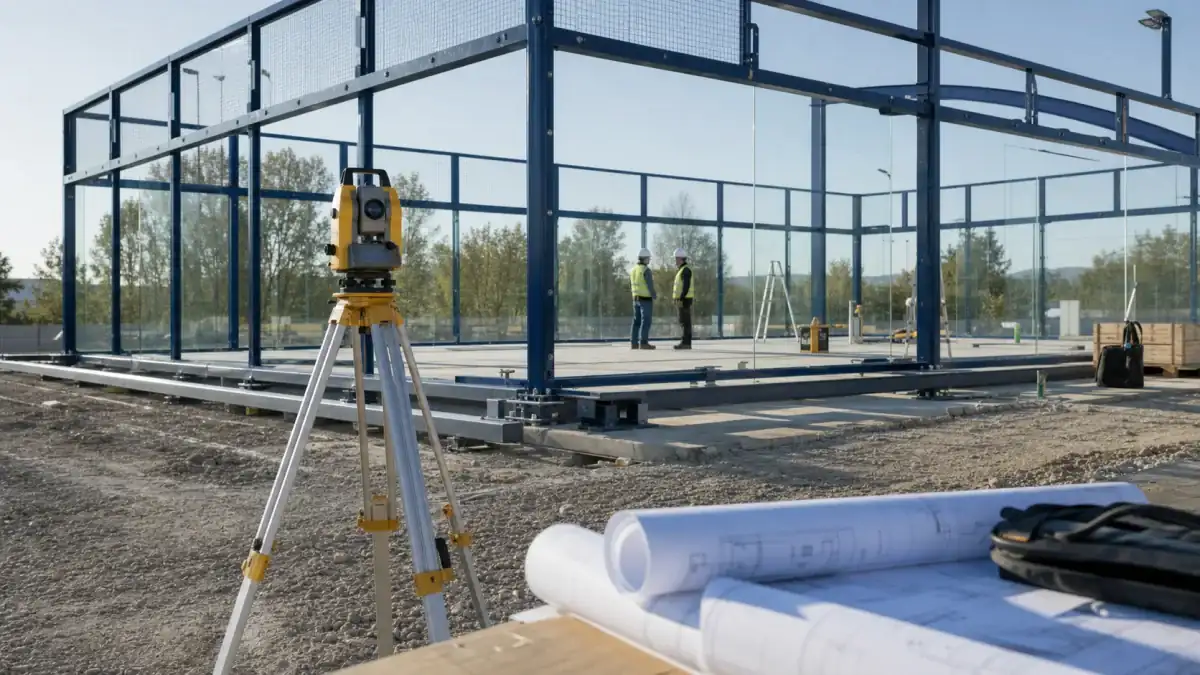
Record dimensions, levels, access routes, crane access, electrical supply, drainage points and obstacles. If an existing base will be reused, verify its geometry and structural suitability.
3. Layout and orientation
Position courts for safe circulation, maintenance and efficient operation. Outdoor projects should also consider sun path and prevailing winds.
4. Structural and infrastructure design
Coordinate the steel frame, glass fixings, anchors and foundations for project conditions. Finalise electrical, lighting and drainage details before production.
5. Production and quality control
Manufacture components to approved drawings. Check dimensions, surface protection, connection points and packaging before dispatch.
6. Logistics planning
Plan transport, unloading and safe storage for glass panels and long steel members. Matching packing order to installation sequence reduces lost time on site.
7. Installation
After setting out and anchor checks, complete the steel, glass, mesh, lighting and turf stages in sequence. Verify tolerances and connections throughout.
8. Testing and handover
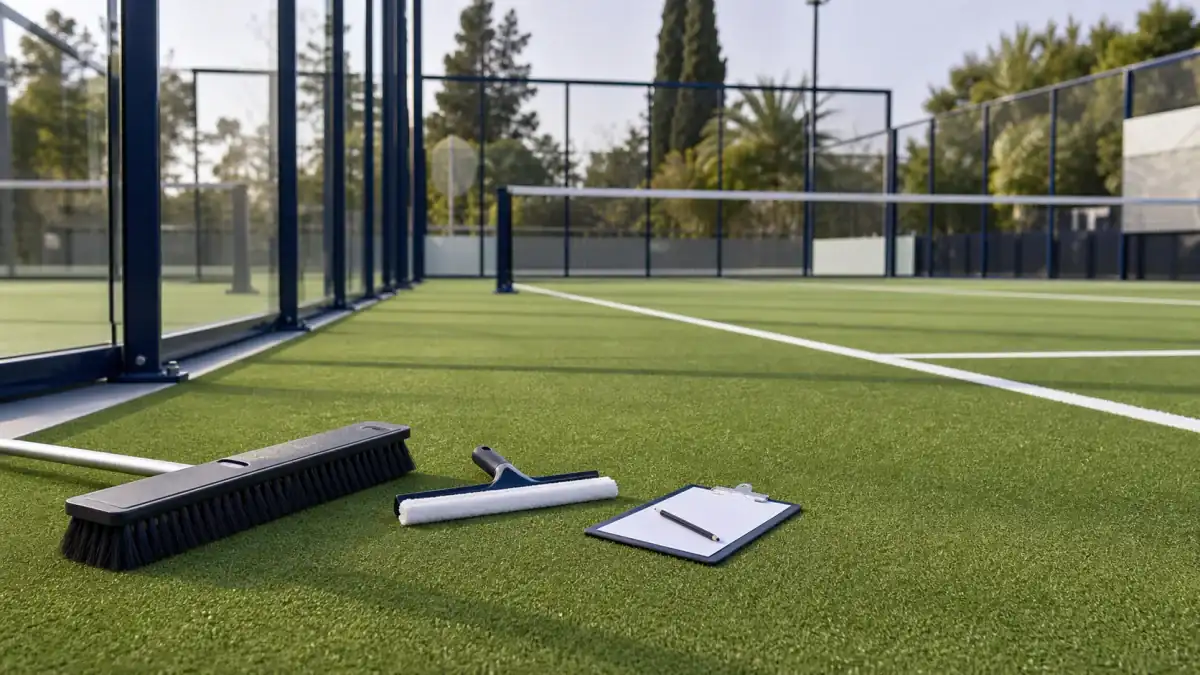
Review doors, glass fixings, lighting, surface, drainage and general safety. Provide operation and maintenance information and create handover records.
Conclusion
A good court is the result of decisions made in the right order, not only the right products. Padel Court creates one technical workflow from survey through production and installation to reduce project risk before work begins.