Panoramic vs Classic Padel Court: Key Differences
Court type is one of the decisions to make before asking for a quote. Models that look alike in a catalogue differ clearly in visibility, structure, installation and budget. The difference between a panoramic vs classic padel court is most visible in the steel posts behind the glass, but its effects run from the spectator experience all the way to the structural calculations. This guide compares the main types of padel courts (classic, panoramic, super-panoramic and portable) and looks at which court suits which kind of venue.
Short answer: A classic court has steel posts between and behind its glass panels. A panoramic court removes the posts behind the glass for an uninterrupted view. A portable court stands on its own base frame without anchors into the ground and can be moved. The right choice depends on how the court will be used, spectator expectations, site conditions and budget.
Padel court types at a glance
Manufacturers use many model names, but most padel court models fall into four groups:
- Classic (standard) court: visible steel posts behind and between the glass panels.
- Panoramic court: no posts behind the back and side glass; the panels are carried by special fixings.
- Super-panoramic court: takes the panoramic idea further, with almost no steel left across the glass.
- Portable court: stands on its own base frame without ground anchors and can be dismantled and moved.
Names and technical details vary between manufacturers. When comparing quotes, look past the model name to the glass thickness, steel sections and fixing details.
Classic courts: posts behind the glass
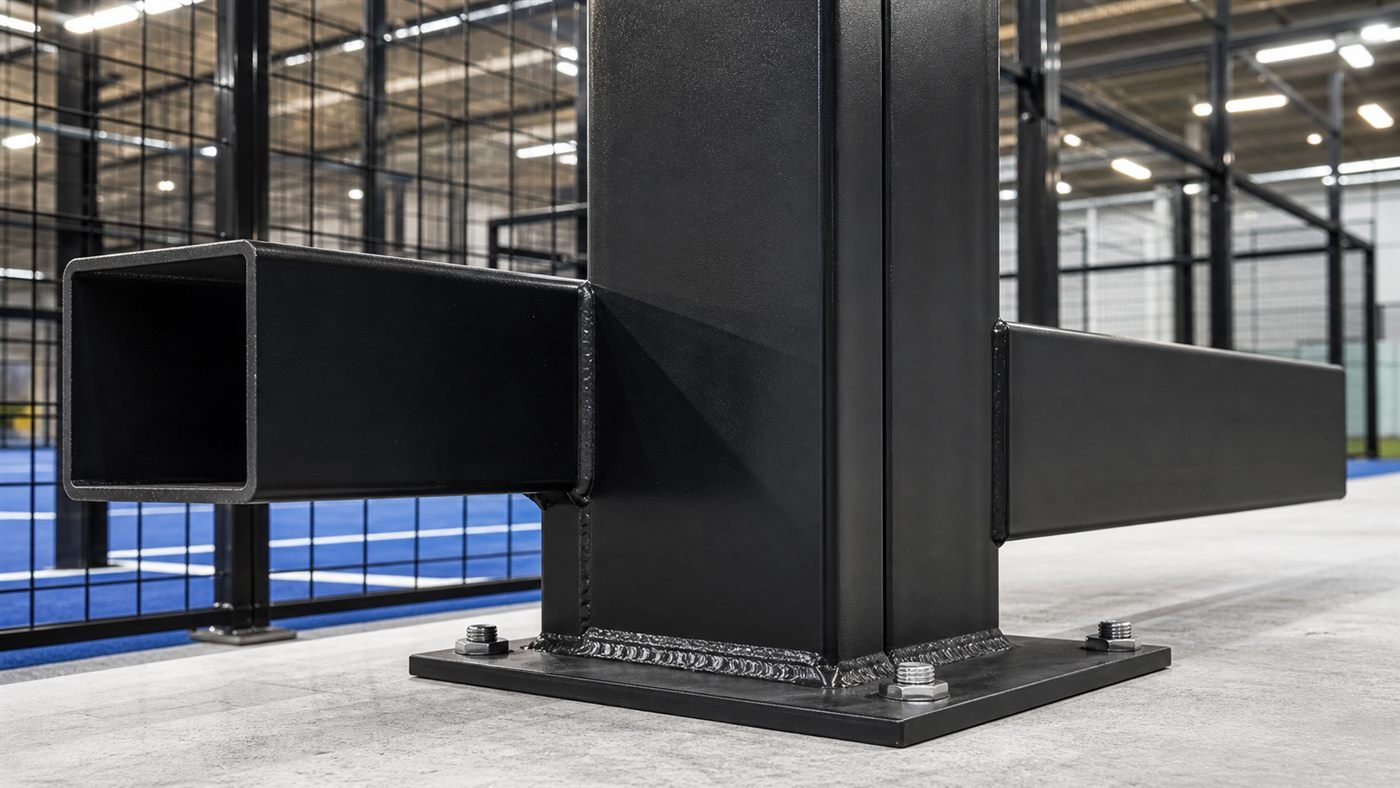
On a classic court, the glass panels are fixed to vertical steel posts set between and behind them. The posts carry both the glass and the mesh panels above. Because loads are spread over many points, the structure is relatively simple to engineer and robust.
Strengths of a classic court
- Lower investment and a wide choice of manufacturers
- A sturdy structure that spreads wind loads on open sites
- Relatively easy glass replacement and maintenance
- Widely accepted for club and recreational play
The weakness is visibility. The posts break the view for spectators and cameras outside the court. For players, the posts sit behind the glass surface, so they do not affect the bounce.
Panoramic and super-panoramic courts
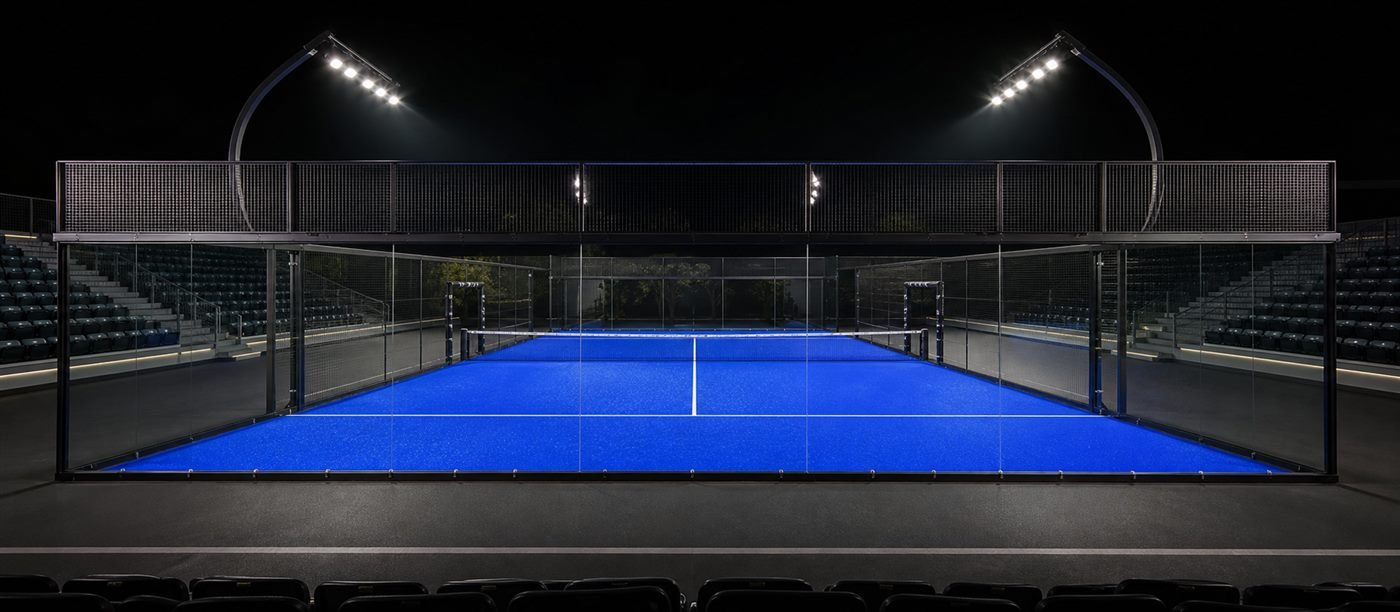
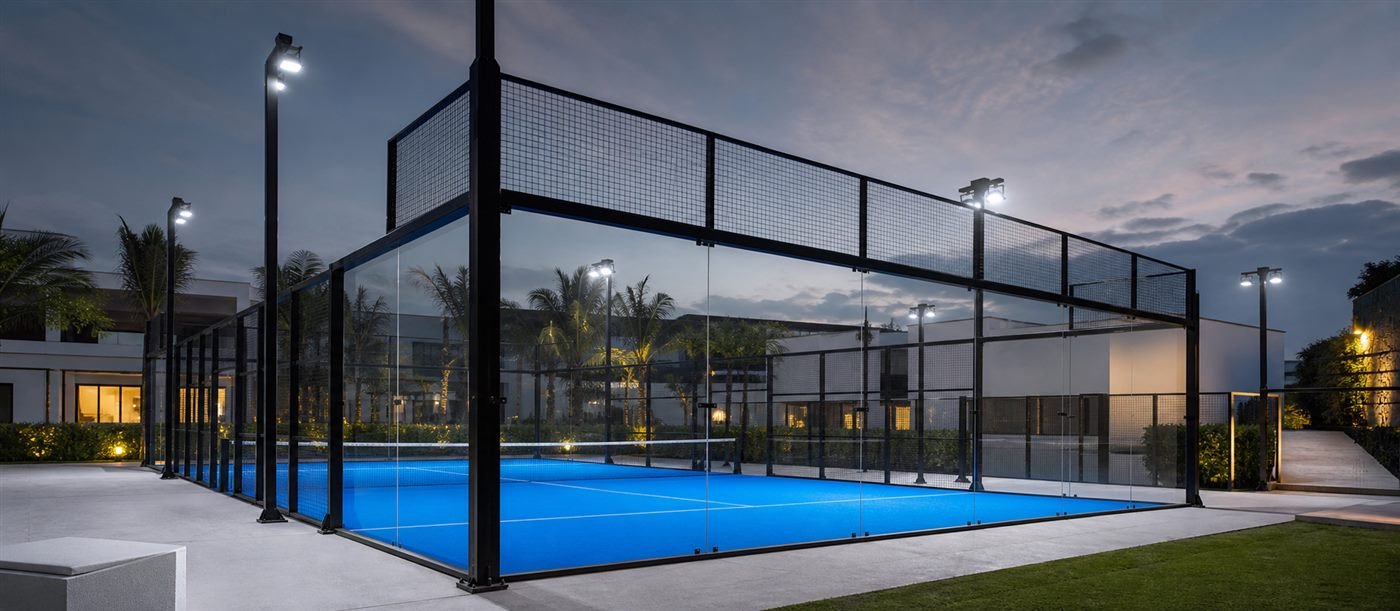
On a panoramic court, the posts behind the back and side glass are removed. The panels are held by top and bottom fixings and by heavier steel members at the corners and edges. From outside, the court reads as an almost continuous glass surface, which clearly improves the spectator experience and the court’s visibility in photos, video and broadcast.
Removing posts means loads travel through fewer points. Glass thickness, fixing details, steel sections and anchor design all become more critical. Panoramic courts usually use thicker tempered glass, often 12 mm. See our tempered glass guide for panoramic courts for the quality criteria.
Super-panoramic courts
Super-panoramic models reduce the last steel elements on the glass to a minimum. The visual effect is the strongest of all, which is why they are chosen for show courts, centre courts and venues where brand visibility matters. The demands on engineering, manufacturing precision and installation quality are also the highest.
Portable padel courts
A portable padel court sits on a steel base frame and needs no anchors into the ground. Its weight and base geometry keep it stable. That makes it suitable for events, shopping centres, temporary venues and sites with uncertain lease terms.
Points to watch with portable courts
- The ground still has to be flat and load-bearing; the base frame does not make up for a poor surface.
- Outdoors, wind load needs a separate check because the system is not anchored.
- Frequent dismantling and reassembly calls for extra checks on fixings and glass.
- The base frame lifts the playing surface slightly above ground, so plan a ramp or step at the entrances.
For a long-term, heavily used club, a permanent anchored installation is usually the better fit. A portable court is a strong option for projects that need flexibility.
Mixing court types in one venue
A multi-court venue does not need identical courts. Making the court that faces the entrance or café panoramic and the others classic keeps the budget in check while giving the venue a showpiece. The courts should still share the same base, lighting and turf specification, or players will notice a difference in play between them. Anchor plans and foundations are prepared separately for each model because post positions differ. If you may swap a classic court for a panoramic one later, designing the base for that now makes the future upgrade simpler.
Panoramic vs classic padel court: comparison
The comparison below summarises the general differences. Exact values depend on the manufacturer’s technical data.
- Visibility: posts break the view on a classic court; panoramic gives a continuous view; super-panoramic gives the cleanest glass surface; on a portable court it depends on the glass system.
- Play: on any correctly installed type the bounce follows the rules; players tend to find a panoramic court feels more open.
- Structure: a classic court spreads load over many posts; panoramic and super-panoramic models concentrate it at fewer points, so structural design and anchoring matter more.
- Installation: classic courts are more forgiving; panoramic models need tighter tolerances and an experienced crew; portable courts follow a different workflow because they are not anchored.
- Budget: classic courts are usually the most economical; panoramic and super-panoramic models need a higher budget. For current ranges, see our padel court cost page.
Which court for which venue
The right type depends on what the venue is for. Some typical scenarios:
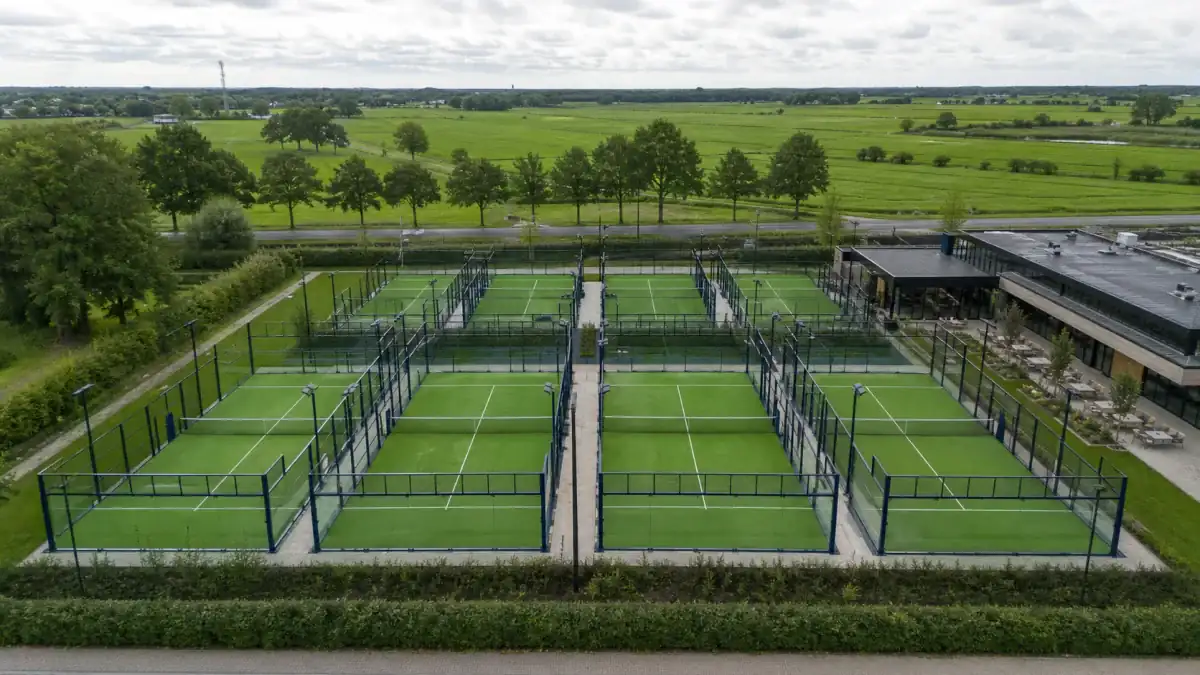
- Recreational club, school or residential complex: a classic court balances budget and durability well.
- Commercial padel club: one or two panoramic show courts alongside classic courts can work well for spectators and events.
- Venue aiming at tournaments and broadcast: panoramic or super-panoramic courts stand out for spectator and camera sightlines.
- Hotel or villa: aesthetics usually point towards a panoramic model, with attention to how it sits in the landscape.
- Events and temporary use: a portable court is the most flexible choice.
Our ten panoramic court references in the Netherlands show how panoramic models work in different venues; you can find them on our projects page. For models and specifications, see our padel court solutions and our panoramic padel court page.
Choose the right court type with us
Once the venue’s purpose, court count and budget are clear, the court type decision gets much easier. Share your project details with the Padel Court team and we will weigh classic, panoramic and portable options against your site. Request a quote or a technical call through our contact page.
Frequently Asked Questions
Is a panoramic court more expensive than a classic one?
Usually, yes. Panoramic courts need thicker glass, heavier steel sections and more precise manufacturing and installation, which raises the budget. How large the difference is depends on the manufacturer, the number of courts and site conditions. See our padel court cost page for current ranges.
Which court type is used for tournaments?
Because spectator and camera sightlines matter, tournament and show courts are usually panoramic or super-panoramic. Whatever the type, dimensions, glass, surface and lighting must meet the relevant federation rules.
Is a portable court as durable as a permanent one?
A good portable court can last for many years, but frequent dismantling and moving call for extra checks on fixings and glass. Outdoors, the stability of an unanchored system in wind needs a separate assessment. For intensive, long-term club use, an anchored installation is usually the better choice.