Tempered Glass Guide for Panoramic Padel Courts
In a panoramic padel court, glass is both a playing wall and an architectural component interacting with the structure. Quality is defined not only by thickness, but also by manufacturing, hole geometry, edge finishing and fixing details.
Short answer: Why is tempered glass used?
Tempering increases mechanical and thermal resistance and improves breakage behaviour for safety. Performance still depends on correct dimensions, support points and installation tolerances.
1. How is thickness selected?
Selection should reflect panel size, court system, fixing arrangement, wind action and project requirements. Thickness alone does not create a safe design.
2. Holes and edges
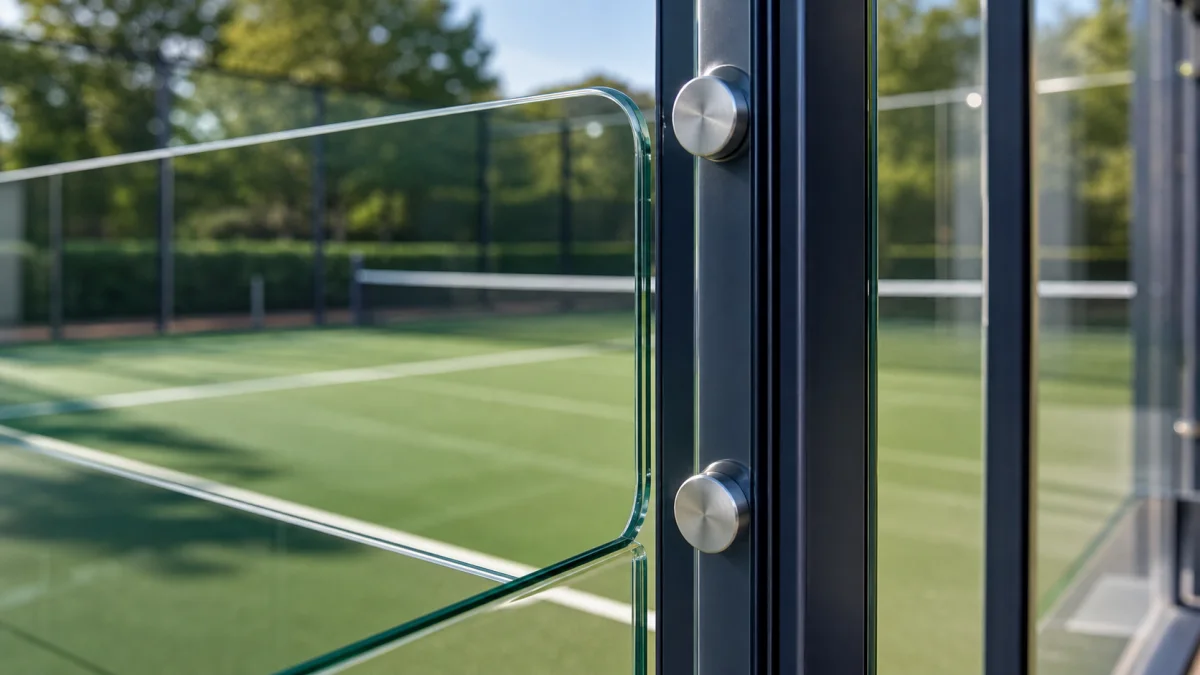
Hole diameters, edge distances and corner radii must be final before manufacture. Tempered glass must not be drilled or cut afterwards. Polished edges need careful protection during transport and installation.
3. Fixings
Glass should not be clamped directly and uncontrollably against metal. Suitable spacers, gaskets and controlled tightening help reduce local stress. Accurate steel geometry is also essential.
4. Handover and inspection
- Visual inspection of edges, corners and holes
- Check for loose or missing fixing components
- Inspect glass-to-metal interfaces
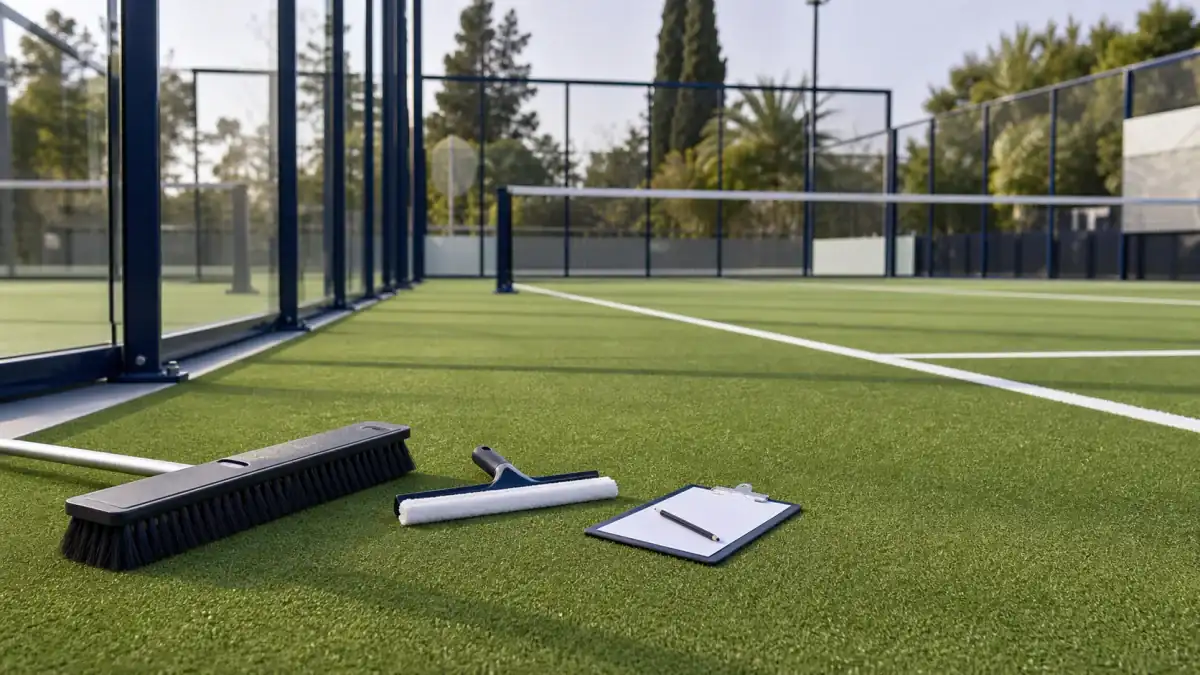
- Use non-abrasive cleaning methods
- Secure the area and obtain specialist assessment for damaged panels
Conclusion
Panoramic quality depends on detail engineering as much as visual clarity. Padel Court coordinates glass dimensions, steel tolerances and fixings in one production model.