How Are Padel Court Foundations and Drainage Built?
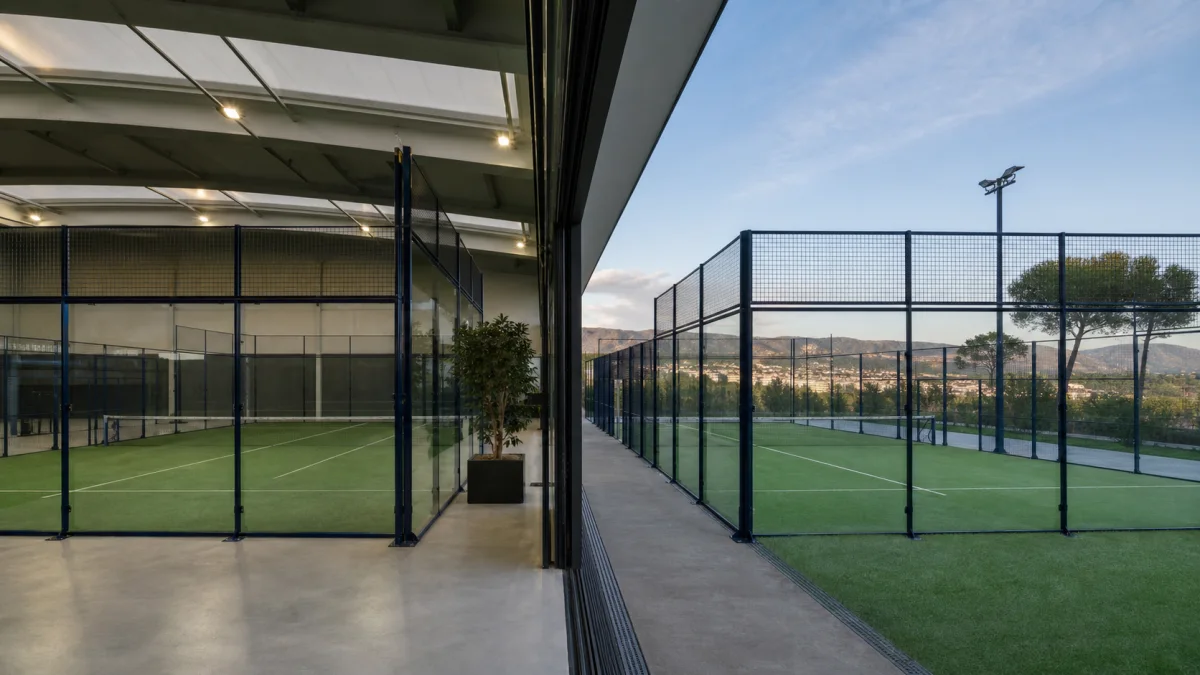
Padel court performance begins below the visible steel and glass. An uneven base affects ball behaviour, while poor drainage can close the court and accelerate wear of turf and connections.
Short answer: What foundation does a padel court need?
The foundation must be designed for ground capacity, climate, court model and local requirements. One standard detail should not be copied to every site. Its purpose is to carry anchor loads safely, maintain a level playing surface and discharge water in a controlled way.
1. Site and level assessment
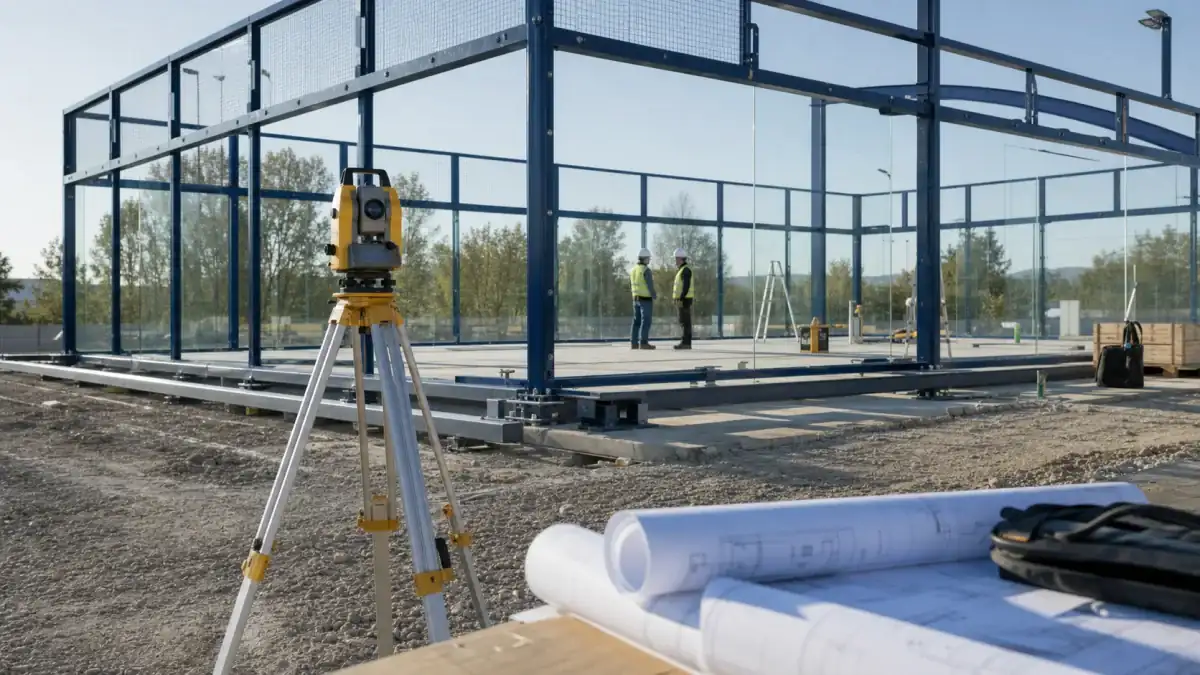
Existing ground, fill quality, frost risk, groundwater and the final discharge point are identified during the survey. Drainage planning must include runoff arriving from outside the court.
2. Sub-base and compaction
Controlled fill layers are placed with suitable moisture and compaction. An inconsistent sub-base can settle unevenly. Level and compaction should be checked before each following stage.
3. Concrete and anchor line
The perimeter beam or slab is coordinated with the steel anchor layout. Edge distances, embedment, levels and installation tolerances are considered together.
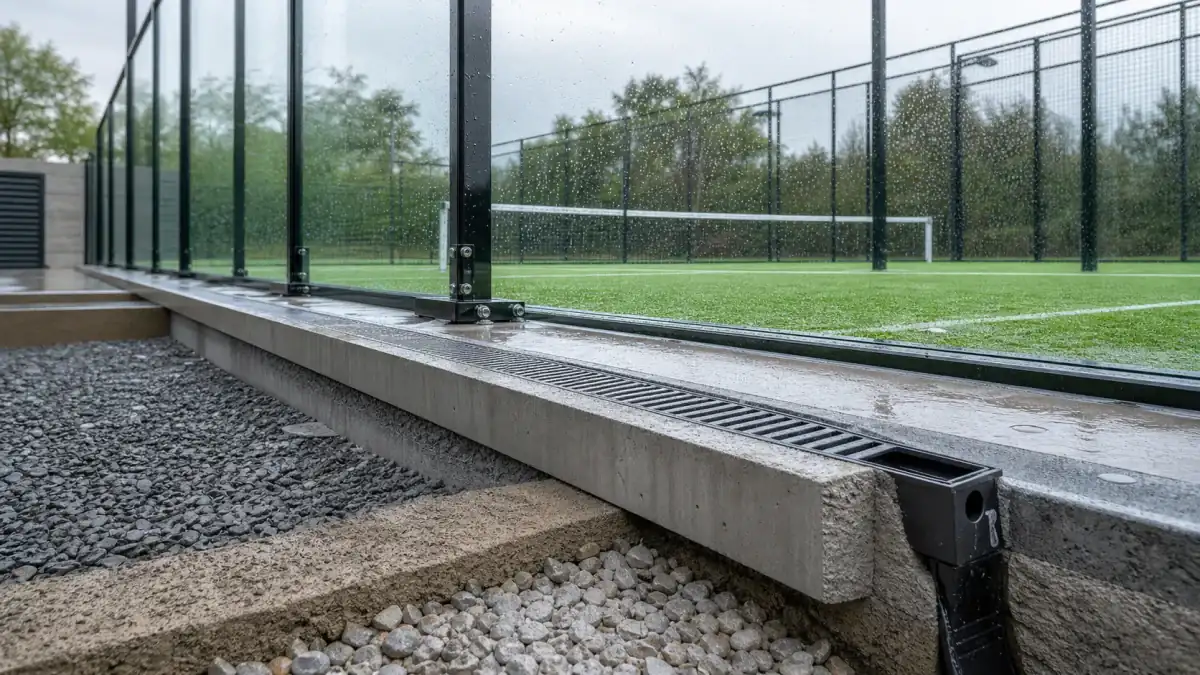
4. Drainage strategy
- Consistent falls across the playing surface
- Perimeter channels or suitable collection points
- Cleanable outlets
- Adequate discharge capacity
- Protection from surrounding landscape runoff
5. Pre-handover checks
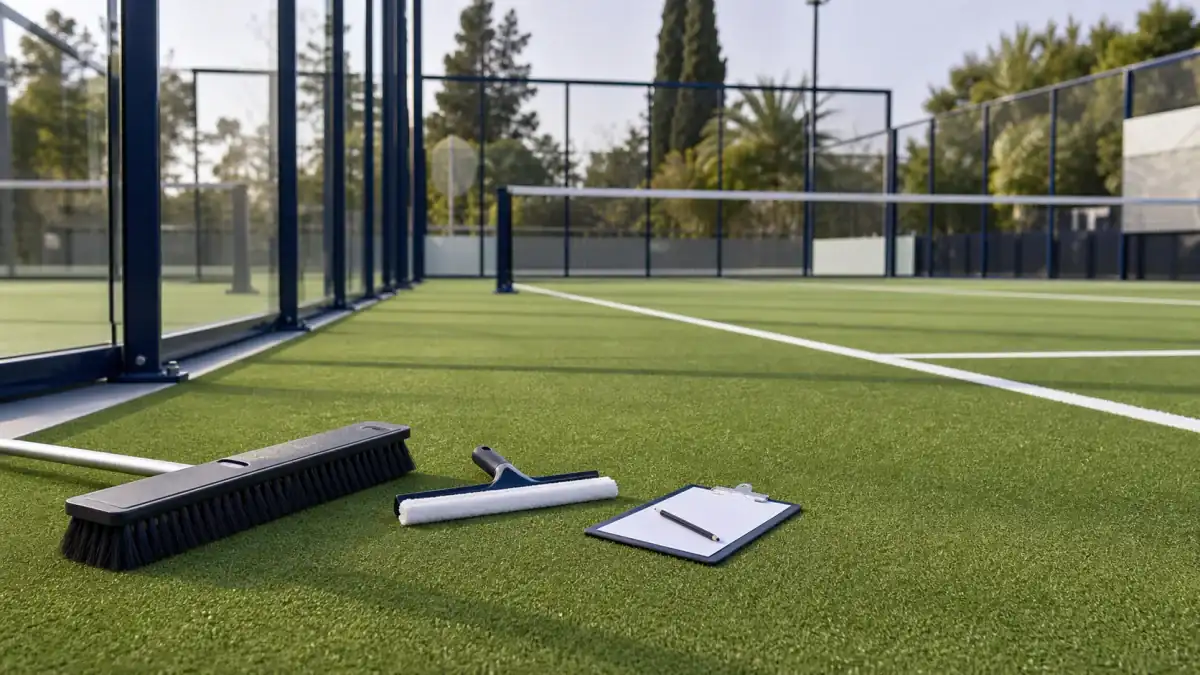
Level surveys, surface tolerances, water-flow tests and anchor positions should be recorded. Superstructure installation should begin only after the infrastructure is accepted.
Conclusion
A durable court stands on infrastructure that manages water and structural loads correctly. Padel Court coordinates foundation, drainage and superstructure details as one project.